Skip to content
Can You Wash a HEPA Filter? Safe Guide & Key Risks

Can You Wash a HEPA Filter? Safe Guide Key Risks

Many people who own air purifiers or vacuum cleaners eventually ask the same question: “Can I wash my HEPA filter to make it last longer?”

The reasoning is simple—washing seems like an easy, cost-saving solution to keep a filter clean and efficient. However, not all HEPA filters are made the same, and washing the wrong type can do more harm than good.

The quick answer: some HEPA filters are washable, but most are not. Knowing the difference is crucial to protecting your indoor air quality, extending equipment life, and avoiding costly mistakes.

This guide will walk you through how to identify washable filters, the risks of washing non-washable ones, and the best maintenance practices for both types.

Understanding HEPA Filters

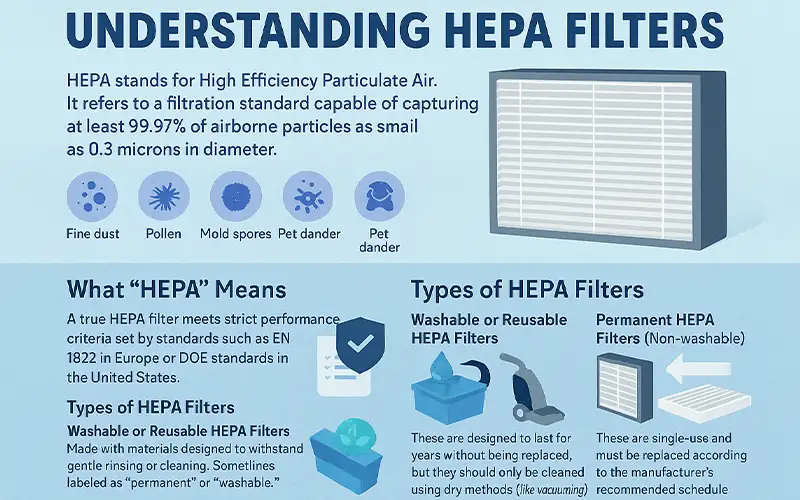
HEPA stands for High Efficiency Particulate Air. It refers to a filtration standard capable of capturing at least 99.97% of airborne particles as small as 0.3 microns in diameter. This makes HEPA filters highly effective against fine dust, pollen, mold spores, pet dander, and even some bacteria.

What “HEPA” Means

A true HEPA filter meets strict performance criteria set by standards such as EN 1822 in Europe or DOE standards in the United States. These standards ensure the filter consistently traps particles in the most penetrating particle size range (MPPS), offering reliable air cleaning for both residential and industrial applications.

Types of HEPA Filters

Washable or Reusable HEPA Filters

Made with materials designed to withstand gentle rinsing or cleaning, these filters are sometimes labeled as “permanent” or “washable.” While they can be reused multiple times, improper washing may damage the fibers or reduce efficiency.

Permanent HEPA Filters (Non-washable)

These are designed to last for years without being replaced, but they should only be cleaned using dry methods (like vacuuming) to avoid damaging the filter media.

Disposable HEPA Filters

These are single-use and must be replaced according to the manufacturer’s recommended schedule. They typically offer the highest efficiency because their fiber structure remains intact and uncompromised by cleaning.

Can You Wash a HEPA Filter?

Yes — but only if it is specifically designed to be washable. Many HEPA filters are not meant to be cleaned with water. Washing a non-washable filter can damage its delicate fiber structure, reduce its ability to trap microscopic particles, and shorten its lifespan.

How to Identify a Washable HEPA Filter

  • Check the product label – Look for clear wording such as washable HEPA, permanent HEPA, or reusable HEPA. If it simply says HEPA without these terms, it’s most likely non-washable.

  • Inspect the filter frame – Washable HEPA filters often have durable plastic frames, while non-washable models may use cardboard or paper edges.

  • Review the manufacturer’s instructions – Always confirm care recommendations from the user manual or the manufacturer’s official website. The U.S. Environmental Protection Agency (EPA) advises following manufacturer guidelines to maintain filtration performance and indoor air quality.

If there’s any uncertainty, it’s best to avoid washing and instead replace the filter according to the manufacturer’s schedule to ensure optimal air quality and HVAC performance.

Risks of Washing a Non-Washable Filter

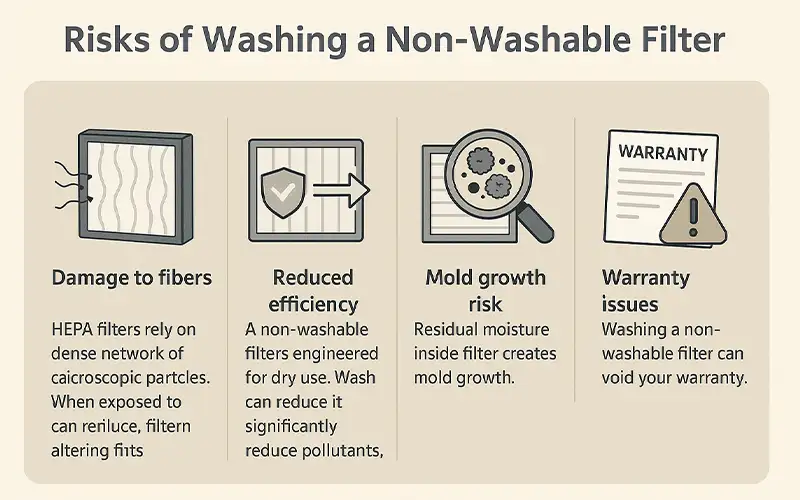
Damage to fibers

HEPA filters rely on a dense network of microscopic fibers to capture tiny airborne particles. When exposed to water, these fibers can swell, shift, or break, permanently altering the filter’s structure. Once damaged, the filter can no longer achieve its original efficiency.

Reduced efficiency

A non-washable HEPA filter is engineered for dry use. Washing can remove electrostatic charges that help trap particles, or cause fiber misalignment that allows pollutants to pass through. Even if the filter looks clean after washing, its ability to capture fine dust, allergens, and microorganisms may drop significantly.

Mold growth risk

Residual moisture trapped inside the filter media creates an ideal environment for mold and bacteria. Once mold colonies develop, they can release spores back into the air, worsening indoor air quality and potentially causing health issues.

Warranty issues

Many manufacturers explicitly state that washing a non-washable HEPA filter voids its warranty. If the filter fails prematurely after being washed, you may be unable to claim a replacement or refund. Always check your product’s warranty terms before attempting any cleaning method.

Can You Wash a HEPA Filter Safe Guide Key Risks

How to Safely Clean a Washable HEPA Filter

Step-by-step process

Turn off and unplug the device

Ensure the air purifier, vacuum cleaner, or HVAC unit is powered off and disconnected from electricity before removing the filter.

Remove the filter carefully

Follow the manufacturer’s instructions to detach the HEPA filter without damaging the frame or sealing gasket.

Rinse with cool or lukewarm water

Hold the filter under a gentle stream of water. Avoid high-pressure sprays, scrubbing, or using cleaning agents, as these can damage the filter media. Rinse in the direction of airflow to prevent debris from lodging deeper into the fibers.

Shake off excess water

Lightly shake the filter to remove as much water as possible without bending or twisting the frame.

Drying guidelines

Air-dry only

Place the filter upright in a well-ventilated area away from direct sunlight or heat sources, which can warp the frame or shrink the filter media.

Allow full drying

Ensure the filter is completely dry before reinstalling it—this may take 24–48 hours. Any residual moisture can lead to mold growth inside the device.

Check for damage

Before placing it back, inspect the filter for tears, deformations, or loose fibers. Replace it if you see any signs of deterioration.
What to Do If It’s Not Washable

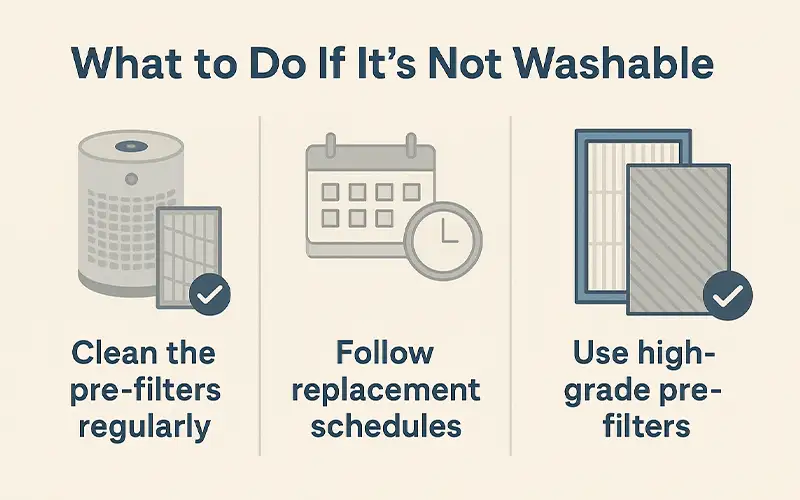
Clean the pre-filters regularly

Many air purifiers, vacuums, and HVAC systems include a pre-filter that traps larger dust and debris before it reaches the HEPA filter.

These pre-filters are often washable or vacuum-cleanable. Cleaning them every 2–4 weeks can help extend the HEPA filter’s life and maintain airflow efficiency.

Follow recommended replacement schedules

Non-washable HEPA filters should be replaced according to the manufacturer’s guidelines—typically every 6–12 months for air purifiers, or more frequently in high-pollution or allergy seasons.

Check your device’s manual for exact intervals, as overused filters can severely reduce air quality and strain the motor.

Use high-grade pre-filters for extra protection

Installing a high-quality pre-filter or carbon filter upstream of the HEPA filter can help capture larger particles and gases, reducing the load on the HEPA filter.

This can be especially useful in homes with pets, smokers, or heavy dust. High-grade pre-filters not only protect the HEPA filter but may also help control odors and volatile organic compounds (VOCs).

Handling Large Volumes of Air Contaminants

Industrial environments often produce significant amounts of airborne contaminants that require powerful and efficient filtration systems to manage effectively.

Managing Filter Maintenance and Replacement

Regular maintenance and timely replacement of filters are essential to keep air filtration systems working effectively. However, this can be challenging in large-scale operations where downtime is costly.

Balancing Air Quality with Energy Consumption

While maintaining high air quality is crucial, it must be balanced with energy efficiency. The challenge lies in optimizing filtration systems to provide clean air without significantly increasing energy consumption.

Adapting to Changing Environmental Regulations

As environmental regulations evolve, industries must continually adapt their air filtration practices. Staying ahead of regulatory changes requires ongoing investment in filtration technology and system upgrades.

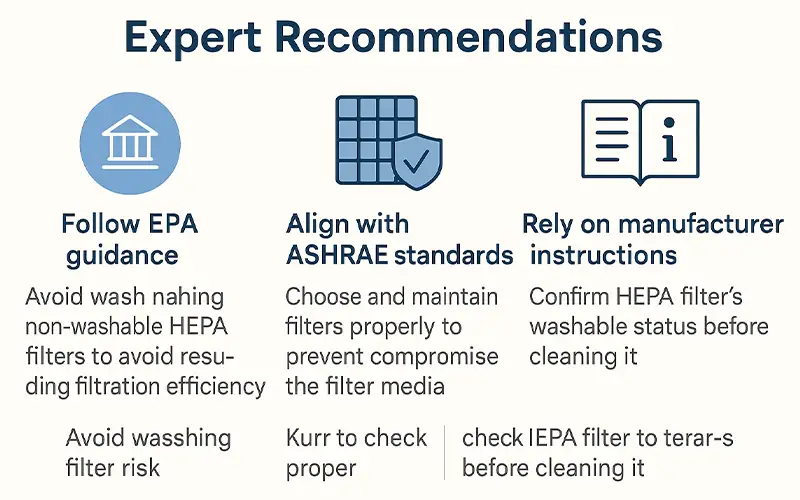
Expert Recommendations

Follow EPA guidance on filter care

The U.S. Environmental Protection Agency (EPA) advises that air filters should be replaced or cleaned according to the manufacturer’s instructions to maintain indoor air quality and system efficiency.

They emphasize that attempting to wash a non-washable HEPA filter can reduce filtration efficiency and may lead to pollutant leakage back into the air. For more, see the EPA guide on residential air filters.

Align with ASHRAE standards for filtration performance

The American Society of Heating, Refrigerating and Air-Conditioning Engineers (ASHRAE) recommends selecting filters based on Minimum Efficiency Reporting Value (MERV) ratings and maintaining them as specified by the manufacturer.

They note that HEPA filters, by design, require careful handling to preserve their fine fiber structure. Washing a filter not intended for it can compromise the media, leading to reduced particle capture. Read ASHRAE’s position on filtration and air cleaning.

Rely on manufacturer-specific maintenance instructions

Even among washable HEPA filters, cleaning methods can vary. Industry experts recommend:

  • Always confirming the model’s washable status via the label or manual

  • Using only the cleaning methods prescribed (e.g., gentle rinsing, no detergents)

  • Allowing the filter to fully dry before reinstallation to prevent mold growth

By following expert-backed practices, you can ensure your HEPA filter continues to operate at peak performance while avoiding unnecessary damage.

Cost-Benefit of Washing vs Replacing

Long-term cost analysis

Washable HEPA filters often have a higher upfront price compared to disposable models, but their ability to be cleaned and reused can save money over time.

For example, a washable HEPA filter may last 2–5 years with proper maintenance, eliminating the need for frequent replacements. In contrast, disposable HEPA filters—while cheaper initially—must be replaced every 6–12 months, leading to higher cumulative costs.

However, the savings from washable filters only hold if they are maintained correctly; neglect or improper cleaning can shorten their lifespan and negate the benefit.

Safety considerations

While washing a true washable HEPA filter can be cost-effective, safety should be a primary factor in the decision. Improper cleaning of a washable filter or accidental washing of a non-washable filter can lead to:

  • Reduced particle capture efficiency, allowing allergens, dust, or pathogens to circulate indoors

  • Mold growth if the filter is reinstalled before completely drying

  • Possible voiding of the manufacturer’s warranty

If your main priority is maximum filtration reliability with minimal maintenance risk, replacing disposable HEPA filters on schedule may be the safer long-term investment—especially in environments with sensitive occupants, such as hospitals, childcare facilities, or homes with allergy sufferers.

Maintenance Checklist & FAQs

Quick reference for homeowners

Maintenance checklist

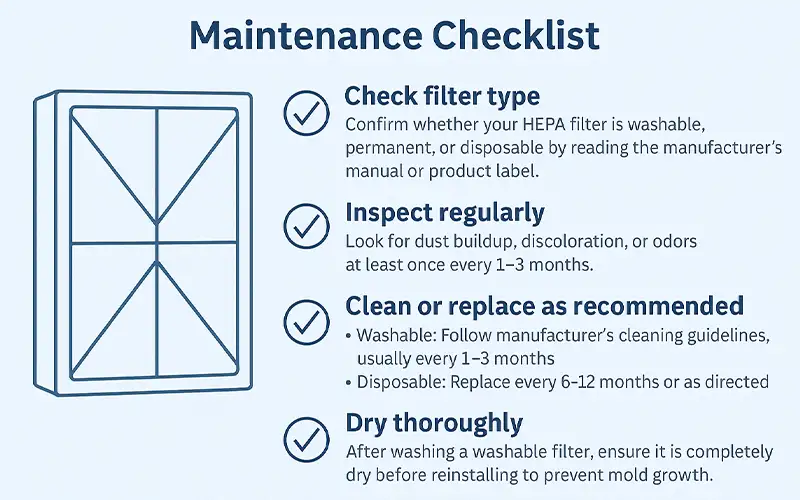
  • Check filter type: Confirm whether your HEPA filter is washable, permanent, or disposable by reading the manufacturer’s manual or product label.

  • Inspect regularly: Look for dust buildup, discoloration, or odors at least once every 1–3 months.

  • Clean or replace as recommended:

    • Washable: Follow manufacturer’s cleaning guidelines, usually every 1–3 months.

    • Disposable: Replace every 6–12 months or as directed.

  • Dry thoroughly: After washing a washable filter, ensure it is completely dry before reinstalling to prevent mold growth.

  • Use pre-filters: Install a pre-filter to trap larger debris and extend the HEPA filter’s service life.

FAQs

  • Can I vacuum my HEPA filter instead of washing it?
    Yes, if the manufacturer approves. Use a soft brush attachment to remove surface dust, but avoid damaging the fibers.

  • What happens if I wash a non-washable HEPA filter?
    The fibers can be damaged, efficiency will drop, and you may void the warranty. Always confirm the filter type first.

  • How do I know when it’s time to replace my HEPA filter?
    Reduced airflow, persistent odors, or visible damage are clear signs. Some systems have filter change indicators for convenience.

  • Are washable HEPA filters less effective than disposable ones?
    Not necessarily. Both can meet HEPA standards when new, but washable models require consistent maintenance to maintain performance.

Conclusion & Call-to-Action

When it comes to HEPA filters, the safest approach is to follow the manufacturer’s recommendations and avoid washing non-washable models.

Identifying whether your filter is washable, permanent, or disposable is the first step to ensuring your air purification system continues to deliver high efficiency without risking damage, reduced performance, or health concerns like mold growth.

If your filter is washable, clean it carefully according to proper guidelines and allow it to dry completely before reinstalling. If it’s not washable, follow a consistent replacement schedule and consider using pre-filters to extend its service life.

For high-quality HEPA filters designed for both residential and commercial applications, explore our full range of Cleanlink HEPA filtration solutions here: Cleanlink HEPA Filters.

Investing in the right filter now ensures cleaner air, better system performance, and long-term savings.

Need Help Choosing the Right Air Filters for Your Facilities?

Selecting the right air filters for your facilities can be a challenging task, given the variety of filter types and specifications available. If you're unsure about which filter best suits your needs, our team of experts is here to help.

With years of experience in air filtration solutions, we can guide you in choosing the ideal filter to optimize your application's performance and ensure superior air quality.

Contact us today for personalized advice and assistance tailored to your specific requirements.

Clean-Link offers High Quality HEPA Filters

Clean-Link offers a range of high-performance air filtration products designed for residential, commercial, and industrial applications.

Previous article Introduction to Cleanroom Fan Filter Units (FFUs)
Next article MERV Value Chart Explained: Find Your Perfect Filter

Leave a comment

* Required fields