

Key filtration stages for subway & metro IAQ
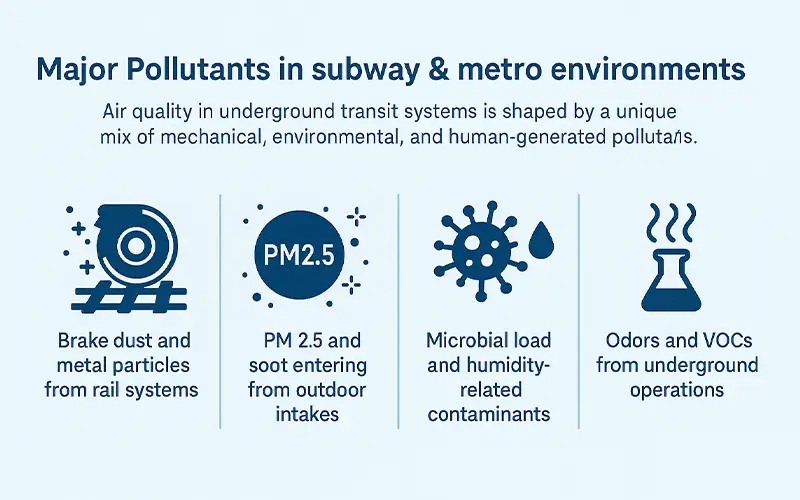
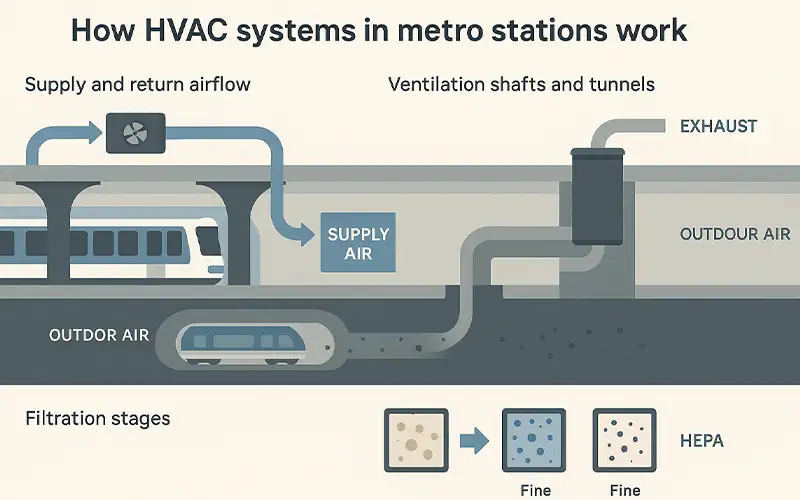
Air quality in subway and metro systems is best controlled with a staged approach to filtration. Each filter class plays a specific role in handling the heavy dust load from tunnels, the fine particles from city air, and the comfort and safety expectations of passengers.
Designing the right sequence—from coarse to fine to gas-phase filtration—helps operators balance cleanliness, energy use, and maintenance cost.
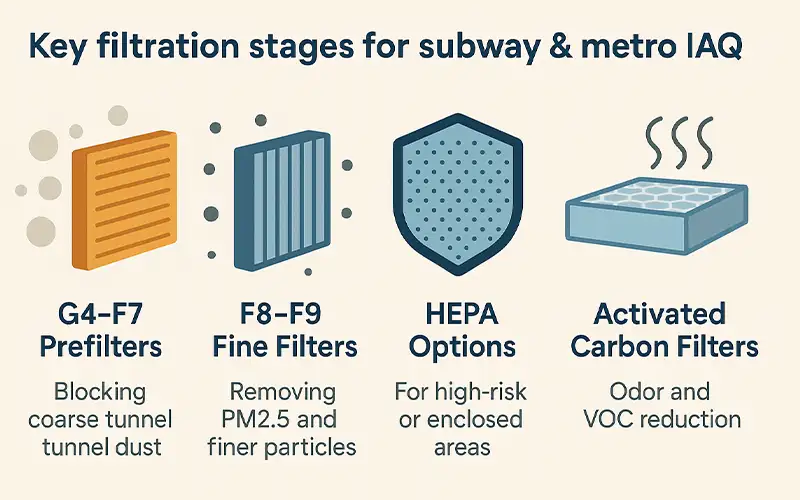
G4–F7 prefilters: blocking coarse tunnel dust
The first barrier in most metro HVAC systems is the G4–F7 prefilter. These filters are installed at air-handling units or main intake points to stop larger particles such as tunnel dust, sand, rust flakes, and debris stirred up by the piston effect of trains.
By capturing coarse material early, G4–F7 filters protect downstream coils, ductwork, and fine filters from rapid loading. This reduces cleaning frequency, stabilizes pressure drop, and extends the life of more expensive filtration stages.
In older tunnels with heavy dust accumulation, robust prefiltration is critical to avoid constant fouling and system performance loss.
F8–F9 fine filters: removing PM2.5 and finer particles
Downstream of prefilters, F8–F9 fine filters are responsible for controlling PM10 and PM2.5 levels within platforms and concourses.
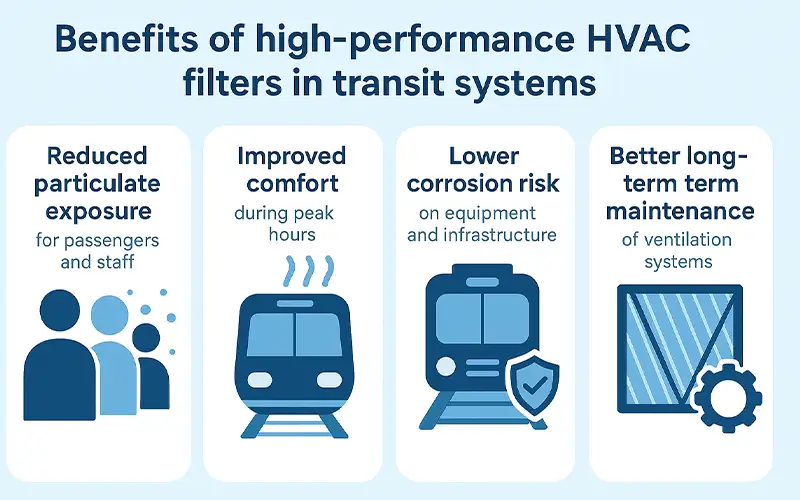
These filters target the smaller particles from brake wear, rail friction, outdoor pollution, and soot that prefilters cannot fully capture. By placing F8–F9 filters in supply-air paths before the air reaches occupied zones, metro operators can significantly reduce passenger exposure to fine particulate matter.
Fine filtration also helps protect sensitive equipment, signage, sensors, and electrical cabinets from dust accumulation, which can cause overheating or premature failures in harsh underground environments.
HEPA options for high-risk or enclosed areas
In some locations, such as staff control rooms, technical rooms, medical facilities, or enclosed passenger spaces, HEPA-level filtration (e.g., H13) may be justified.
These filters offer very high capture efficiency for ultra-fine particles and bioaerosols, providing an additional layer of protection for critical functions or vulnerable occupants.
Because HEPA filters introduce more resistance, they are usually applied selectively rather than across the entire station. Used strategically, they can support risk reduction strategies—for example, in emergency refuge rooms or key operational spaces—without placing excessive load on the central ventilation system.
Activated carbon filters for odor and VOC reduction
Particulate filters alone cannot address odors and volatile organic compounds (VOCs) common in underground systems. For that, activated carbon or blended gas-phase filters are added to the filtration train.
These media adsorb fumes from lubricants, fuels, cleaning chemicals, and city pollution that would otherwise cause persistent smells and discomfort. Carbon filters are typically installed after particulate stages to prevent dust from quickly saturating the adsorption media.
In busy urban networks, combining F8–F9 particle filtration with activated carbon stages helps maintain a more pleasant environment, reduces complaints about “stuffy” or “chemical” smells, and supports a more positive passenger experience.


Leave a comment