
Expert Support
Available 24/7 via chat
Available 24/7 via chat

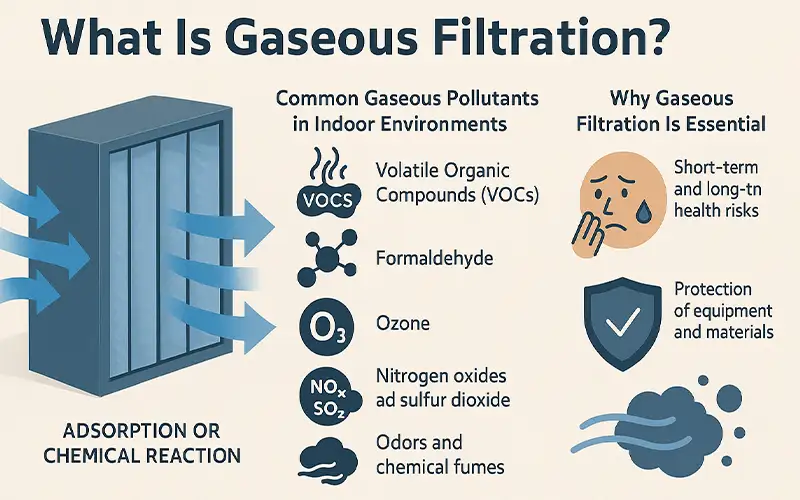
Gaseous filtration refers to the process of removing airborne chemical contaminants such as volatile organic compounds (VOCs), odors, and corrosive gases from indoor environments.
Unlike particulate filters that capture dust and allergens, gaseous filters focus on the molecular level, using adsorption or chemical reaction to neutralize harmful compounds.
According to the U.S. Environmental Protection Agency (EPA), gases and VOCs can negatively affect indoor air quality and human health if not properly managed.
Indoor spaces can contain a wide range of chemical pollutants, often released by building materials, cleaning agents, industrial processes, or outdoor air infiltration. Some of the most common gaseous contaminants include:
Volatile Organic Compounds (VOCs): Emitted from paints, adhesives, cleaning products, and furnishings.
Formaldehyde: Commonly released from pressed wood products, adhesives, and textiles.
Ozone (O₃): Can enter buildings from outdoor pollution or be generated indoors by certain office equipment.
Nitrogen oxides (NOx) and sulfur dioxide (SO₂): Common in urban or industrial areas, harmful to respiratory health.
Odors and chemical fumes: Generated from cooking, manufacturing, or chemical storage.
These pollutants can cause short-term symptoms such as eye and throat irritation and long-term effects including respiratory illness or neurological issues.
Gaseous filtration not only reduces health risks but also protects sensitive equipment, artworks, and archival materials from chemical corrosion.
The ASHRAE guidelines highlight that molecular filtration is an important part of comprehensive indoor air quality management in commercial and industrial HVAC systems.
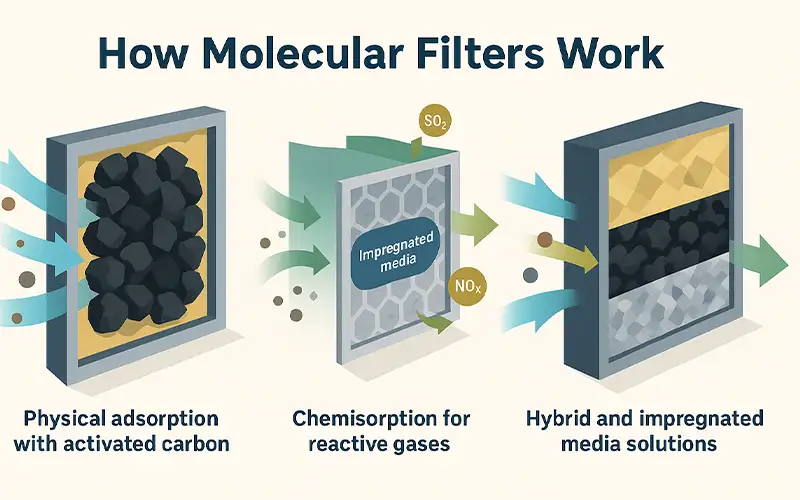
The most common method in gaseous filtration is physical adsorption, which relies on activated carbon. Activated carbon has a highly porous structure, creating a large surface area where gas molecules can be trapped.
This makes it effective for removing odors, VOCs, and many chemical pollutants. The EPA notes that carbon-based filters are widely used to improve indoor air quality by capturing gaseous contaminants that particulate filters cannot address.
In addition to physical adsorption, some molecular filters use chemisorption to neutralize reactive gases.
In this process, gases chemically react with impregnated media, such as potassium permanganate or other chemical agents, and are converted into harmless compounds.
This method is particularly effective for gases like sulfur dioxide (SO₂) and nitrogen oxides (NOx), which are common in industrial and urban environments.
Modern gaseous filtration systems often use hybrid filters that combine activated carbon with impregnated media.
These filters provide a broader range of protection, removing both organic vapors and corrosive gases. By integrating different sorbents, hybrid filters achieve higher efficiency and longer service life.
According to ASHRAE, molecular filters are a critical addition in HVAC systems when gaseous pollutants are present, ensuring both occupant health and equipment protection.
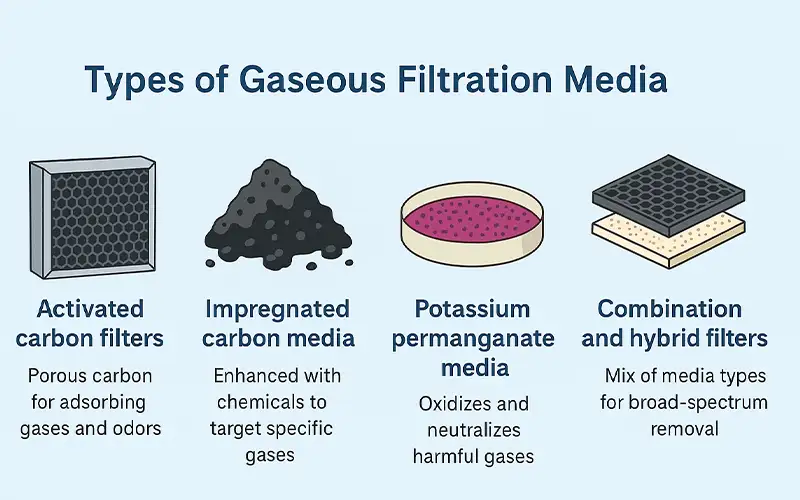
Activated carbon is the most widely used medium for gaseous filtration. Its porous structure provides a large surface area for adsorbing gases and odors, making it effective against VOCs, smoke, and general chemical fumes.
Activated carbon filters are common in both residential and commercial HVAC systems because of their balance of cost and performance.
Impregnated carbon enhances the performance of standard activated carbon by adding chemicals such as potassium iodide, phosphoric acid, or metal oxides.
These additives enable the filter to target specific reactive gases, including sulfur dioxide, nitrogen oxides, and formaldehyde. Impregnated carbon media is often used in laboratories, hospitals, and industrial environments where more complex pollutants are present.
Filters that use potassium permanganate granules or coatings rely on chemisorption to capture and neutralize harmful gases. These media oxidize reactive gases, converting them into less harmful compounds.
Potassium permanganate filters are especially effective in controlling corrosive gases that can damage electronics or sensitive equipment.
Many modern systems use hybrid gaseous filtration media, combining activated carbon with impregnated or permanganate media. This approach provides broad-spectrum removal capabilities, addressing both organic vapors and corrosive gases.
Combination filters are particularly useful in environments such as museums, data centers, and high-traffic commercial spaces where multiple pollutant types must be controlled simultaneously.
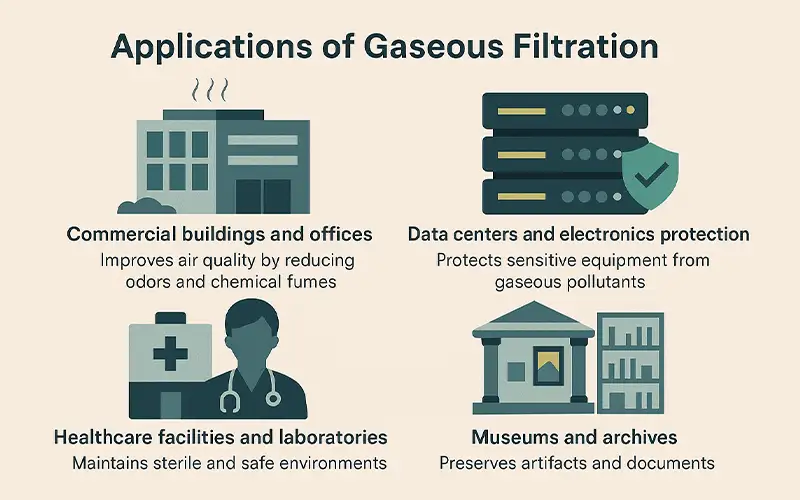
In offices, retail centers, and other commercial spaces, gaseous filtration improves indoor air quality by reducing odors, VOCs, and chemical fumes.
This creates a healthier environment for employees and visitors while also helping building owners meet indoor air quality standards.
Gaseous pollutants such as sulfur dioxide and nitrogen oxides can corrode sensitive electronics and circuit boards. Molecular filters are widely used in data centers and server rooms to protect critical IT equipment from damage, ensuring system reliability and reducing downtime.
Hospitals, clinics, and laboratories rely on gaseous filtration to maintain sterile and safe environments. Filters remove harmful gases, chemical fumes, and odors that could affect both patient health and sensitive medical equipment. In laboratories, molecular filters also protect staff from exposure to hazardous chemical vapors.
Cultural institutions such as museums, galleries, and archives use gaseous filtration to protect artifacts, paintings, and historical documents from chemical degradation. Filters help remove ozone, formaldehyde, and other pollutants that can accelerate the deterioration of valuable collections.
In factories, chemical plants, and paint shops, gaseous filtration plays a vital role in controlling emissions and protecting workers from exposure to harmful gases. By reducing corrosive fumes and VOCs, filters not only improve workplace safety but also help industries comply with air quality regulations.
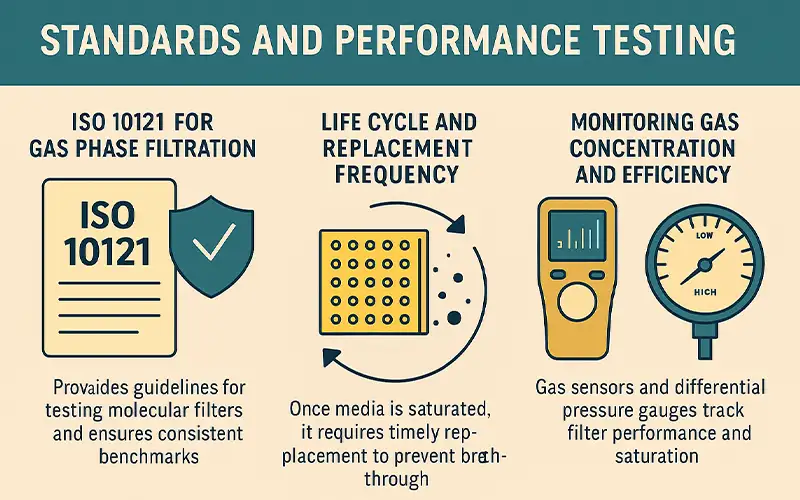
The primary international standard for gaseous filtration is ISO 10121, which provides guidelines for testing the performance of molecular filters.
This standard evaluates gas adsorption capacity, efficiency, and durability under controlled conditions. It ensures that filters meet consistent benchmarks and can be compared across manufacturers.
Unlike particulate filters, gaseous filters have a finite adsorption capacity that depends on media type, pollutant concentration, and airflow rates. Once the media becomes saturated, it can no longer effectively remove gases.
Replacement schedules vary from several months to a year, depending on application and pollutant load. Regular monitoring is essential to prevent breakthrough of contaminants.
Performance testing often includes real-time monitoring of pollutant levels before and after the filter. Gas sensors and differential pressure gauges help facility managers determine when filters need replacement.
Monitoring ensures both compliance with indoor air quality standards and the protection of sensitive environments such as data centers, hospitals, and museums.
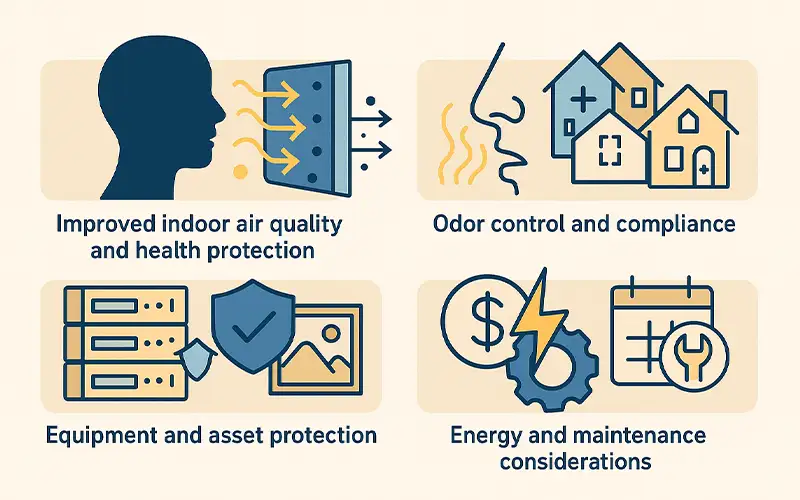
Gaseous filtration reduces harmful contaminants such as VOCs, formaldehyde, and chemical fumes.
This creates healthier environments for building occupants, lowering the risks of respiratory irritation, headaches, and long-term health issues caused by exposure to indoor air pollutants.
By removing odors and chemical vapors, molecular filters improve comfort in workplaces, healthcare facilities, and public spaces.
They also help organizations comply with indoor air quality guidelines and occupational safety standards, reducing the risk of regulatory penalties.
Sensitive equipment such as servers, medical devices, and cultural artifacts can degrade when exposed to corrosive gases.
Gaseous filtration helps extend the lifespan of these assets by preventing chemical corrosion and damage, saving on costly repairs and replacements.
While molecular filters provide significant benefits, they also come with limitations. Gaseous filters generally have higher initial costs than standard particulate filters, and their adsorption media must be replaced once saturated.
In some cases, energy consumption can increase slightly due to additional resistance in the HVAC system. Proper selection and monitoring are essential to balance efficiency and operating costs.


Leave a comment