
Expert Support
Available 24/7 via chat
Available 24/7 via chat

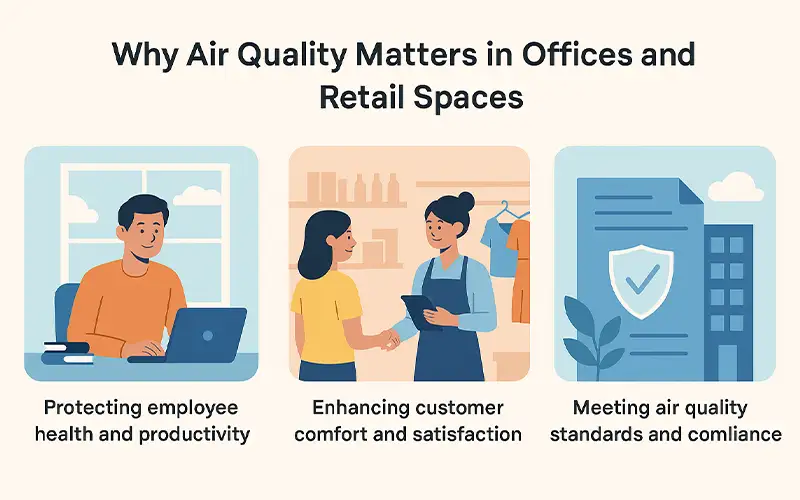
Poor indoor air quality can lead to fatigue, headaches, respiratory issues, and higher absenteeism among employees. Studies show that better air quality directly improves cognitive performance and overall productivity.
According to the U.S. Environmental Protection Agency (EPA), common indoor pollutants like dust, allergens, and VOCs can significantly affect health if not properly managed.
In retail spaces, customer experience is a key driver of repeat visits and sales. Clean, fresh air creates a welcoming atmosphere, while poor air quality may result in odors, discomfort, or even allergic reactions.
A well-designed commercial air filtration system ensures that customers spend more time in-store, increasing engagement and brand loyalty.
Offices and retail facilities are increasingly expected to comply with indoor air quality guidelines and sustainability certifications. Organizations such as ASHRAE provide standards for ventilation and filtration to maintain healthy environments.
By adopting proper commercial air filters, building managers not only meet regulatory requirements but also demonstrate commitment to the well-being of employees and customers.
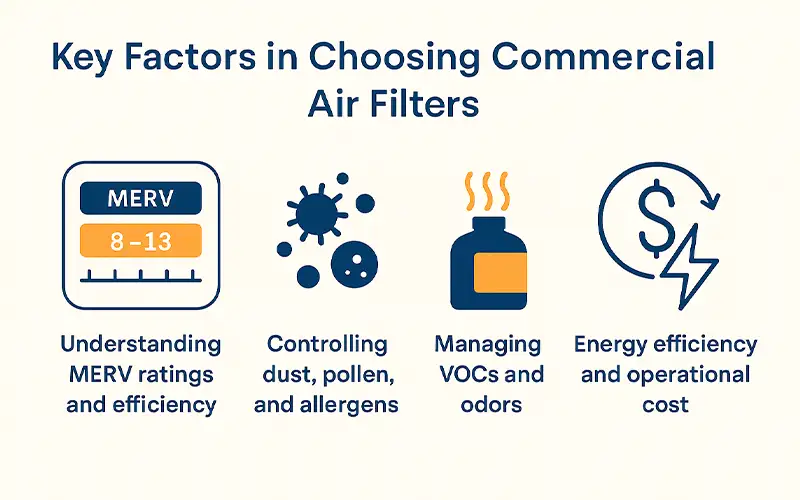
The Minimum Efficiency Reporting Value (MERV) rating measures a filter’s ability to capture particles of varying sizes. For offices and retail spaces, filters with MERV ratings between 8 and 13 often provide the best balance of efficiency and airflow. Higher ratings can trap smaller particles but may increase resistance if the HVAC system is not designed for them. The EPA’s guide on air cleaners explains how MERV ratings influence performance and indoor air quality.
Employees and customers are frequently exposed to airborne allergens such as dust, pollen, and mold spores. Filters with pleated media or higher MERV ratings can effectively capture these contaminants, reducing allergy symptoms and improving comfort.
In environments with heavy foot traffic, stronger filtration may be necessary to maintain a consistently clean indoor environment.
Offices and retail facilities often contain VOCs from cleaning products, furnishings, or paints, as well as odors from daily operations.
Activated carbon filters are effective in adsorbing these gaseous pollutants and eliminating odors. ASHRAE emphasizes that combining particle filters with gas-phase filtration provides a more complete solution for indoor air quality management.
Commercial air filters not only protect occupants but also influence energy use. Filters that balance efficiency with low resistance can reduce HVAC strain, lowering energy consumption and extending system life.
Selecting filters designed for energy efficiency ensures both cost savings and sustainable building operations.
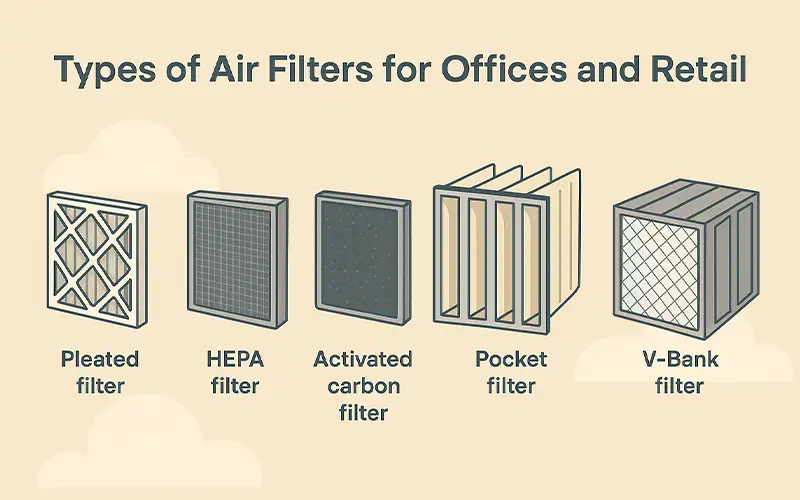
Pleated filters are one of the most common choices for offices and retail environments. Their folded design increases surface area, allowing them to capture more dust, pollen, and fine particles than flat fiberglass filters.
They offer a good balance between efficiency and airflow, making them suitable for general commercial HVAC systems.
High-Efficiency Particulate Air (HEPA) filters are designed to capture 99.97% of particles as small as 0.3 microns. While not always necessary in standard office or retail spaces, they are highly valuable in medical offices, pharmacies, or locations where occupant health is a top priority.
HEPA filters provide strong protection against airborne pathogens and allergens.
Activated carbon filters target gaseous contaminants such as volatile organic compounds (VOCs) and odors. In retail spaces, they help maintain a fresh environment for customers, while in offices, they reduce exposure to chemical pollutants from cleaning products, paints, and furnishings.
These filters are often used alongside pleated or HEPA filters for a comprehensive solution.
Pocket filters, also known as bag filters, are designed for larger HVAC systems in buildings with higher airflow demands. Their multi-pocket construction increases dust-holding capacity, extending service life and reducing maintenance frequency.
They are well-suited for shopping centers, department stores, or office complexes that operate continuously.
V-Bank filters maximize filter surface area in a compact design by arranging pleated media in a V-shaped configuration. This design ensures high efficiency with low airflow resistance, making them ideal for large commercial HVAC systems.
They provide long service life, energy efficiency, and reliable performance in demanding environments such as malls or high-occupancy office towers.
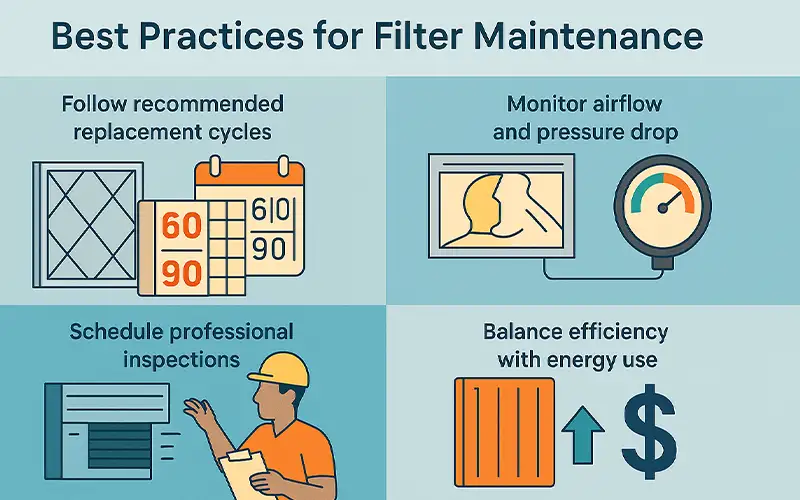
Commercial air filters should be replaced regularly to maintain performance. In most offices and retail spaces, pleated filters are replaced every 60 to 90 days, while high-capacity filters like pocket or V-Bank filters can last longer. High-traffic areas or environments with elevated pollutant levels may require more frequent changes.
As filters collect dust and contaminants, airflow resistance increases. A clogged filter forces HVAC systems to work harder, reducing efficiency and increasing energy costs.
Installing differential pressure gauges helps facility managers track when filters need replacement before performance is compromised.
Routine professional servicing ensures HVAC systems operate efficiently and remain free from microbial buildup.
Regular inspections also help identify issues like improper filter fit, bypass air leaks, or premature wear, which can reduce filtration effectiveness.
Selecting the right filter is not only about particle capture but also about maintaining system efficiency. Filters with excessive resistance can increase operational costs.
Choosing filters designed for both efficiency and energy savings helps reduce maintenance expenses and extend HVAC equipment life.


Leave a comment