Skip to content
What Is Fiberglass Paint Stop Filter Media?

What Is Fiberglass Paint Stop Filter Media?

In spray booth environments, maintaining clean air is critical for both product quality and worker safety. Paint overspray generates fine mist and particles that, if left uncontrolled, can accumulate on equipment, damage ventilation systems, and pose health risks to operators. Effective air filtration ensures that these particles are captured before they spread, helping facilities comply with environmental standards and create safer working conditions.

Among the many solutions available, fiberglass paint stop filter media has become a widely used option. Designed to trap paint overspray efficiently, this media provides reliable performance in automotive, furniture, and industrial coating applications. By serving as the first line of defense, fiberglass paint stop filters protect ventilation systems, improve overall air quality, and support consistent finishing results.

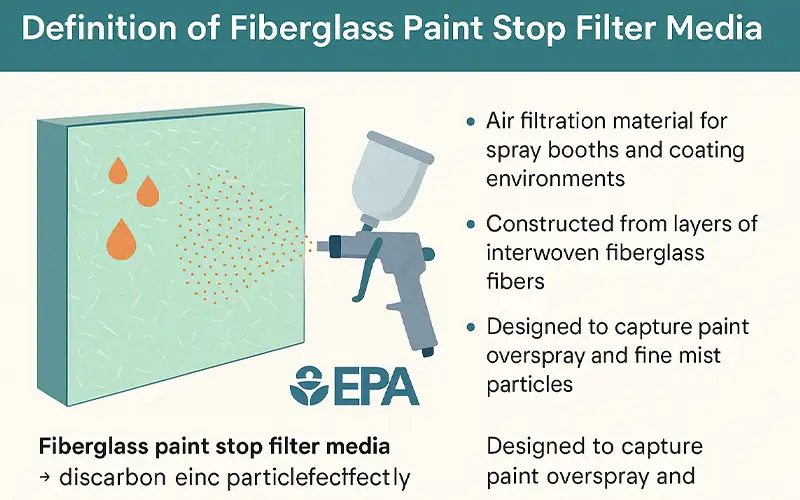
Definition of Fiberglass Paint Stop Filter Media

Fiberglass paint stop filter media is a type of air filtration material specifically designed for spray booths and coating environments. It is constructed from layers of interwoven fiberglass fibers, which are arranged in a progressively dense structure.

This layered design allows the filter to capture paint overspray and fine mist particles effectively, while still permitting adequate airflow through the booth.

The main function of fiberglass paint stop filters is to trap paint droplets and overspray before they enter the exhaust system. As air passes through the filter, larger particles are caught in the front layers, while finer particles are captured deeper within the fiberglass mat.

This depth-loading mechanism maximizes the dust-holding capacity of the filter, ensuring longer service life and stable performance.

According to the U.S. Environmental Protection Agency (EPA) and industry guidelines, proper filtration in spray booth operations reduces harmful emissions, protects ventilation systems, and contributes to cleaner indoor air. By preventing overspray from escaping into the environment, fiberglass paint stop media also helps facilities maintain compliance with air quality standards and improve workplace safety.

What Is Fiberglass Paint Stop Filter Media

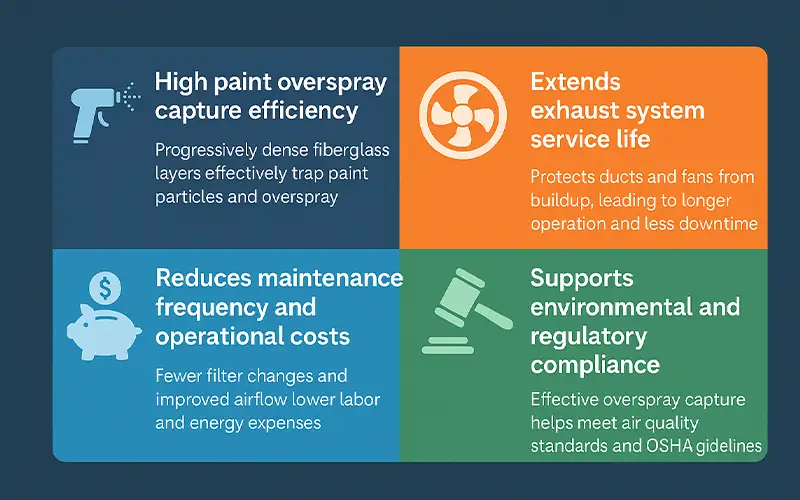
Key Features and Benefits

High paint overspray capture efficiency

Fiberglass paint stop filter media is designed with progressively dense fiberglass layers that effectively trap paint particles and overspray. This high capture rate ensures a cleaner working environment and reduces the risk of contaminants settling on freshly coated surfaces. In spray booth operations, this translates to improved finish quality and fewer product defects.

Extends exhaust system service life

By preventing paint overspray from entering ducts and fans, fiberglass filters protect ventilation systems from buildup and clogging. Cleaner exhaust components experience less wear and tear, resulting in longer service life and reduced downtime. This protection also helps maintain consistent airflow in the booth, ensuring stable coating results over time.

Reduces maintenance frequency and operational costs

The depth-loading design of fiberglass paint stop filters allows them to hold more particles before needing replacement. Fewer filter changes lower maintenance labor and reduce disruption to production schedules. Additionally, efficient airflow means HVAC and exhaust systems consume less energy, further cutting operational expenses.

Supports environmental and regulatory compliance

Effective overspray capture is not just a matter of efficiency but also compliance. According to OSHA guidelines on spray finishing, proper filtration is required to control emissions and protect workers from hazardous exposure. Using fiberglass paint stop filter media helps facilities meet air quality standards, minimize volatile organic compound (VOC) emissions, and maintain a safer, more sustainable operation.
What Is Fiberglass Paint Stop Filter Media

Common Applications

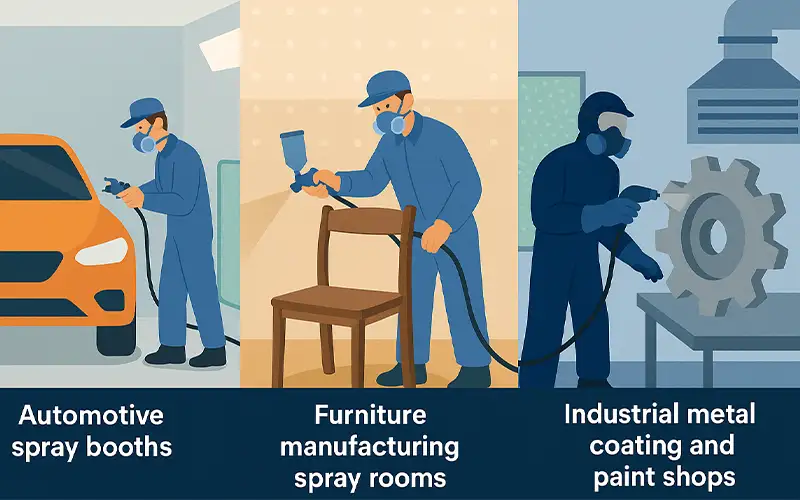
Automotive spray booths

Fiberglass paint stop filter media is widely used in automotive spray booths, where high-quality finishes are critical. These filters effectively capture overspray from basecoats, clearcoats, and primers, keeping the booth air clean and preventing particles from settling on vehicle surfaces. Consistent air quality ensures smoother paint jobs and reduces the risk of rework.

Furniture manufacturing spray rooms

In furniture production, spray finishing is essential for achieving smooth surfaces and durable coatings. Fiberglass paint stop filters trap lacquer, varnish, and paint particles generated during the spraying process. By maintaining clean airflow, they protect wood surfaces from imperfections while helping facilities extend the service life of their ventilation systems.

Industrial metal coating and paint shops

Industrial coating operations often involve heavy-duty spraying of metals, machinery, and large parts. Fiberglass paint stop media provides reliable filtration under high-airflow conditions, capturing fine paint mist and preventing buildup in ducts and exhaust systems. This makes it a preferred solution in factories and workshops that operate continuous spray finishing lines, ensuring compliance with air quality standards and efficient production.

What Is Fiberglass Paint Stop Filter Media

Comparison with Other Paint Stop Media

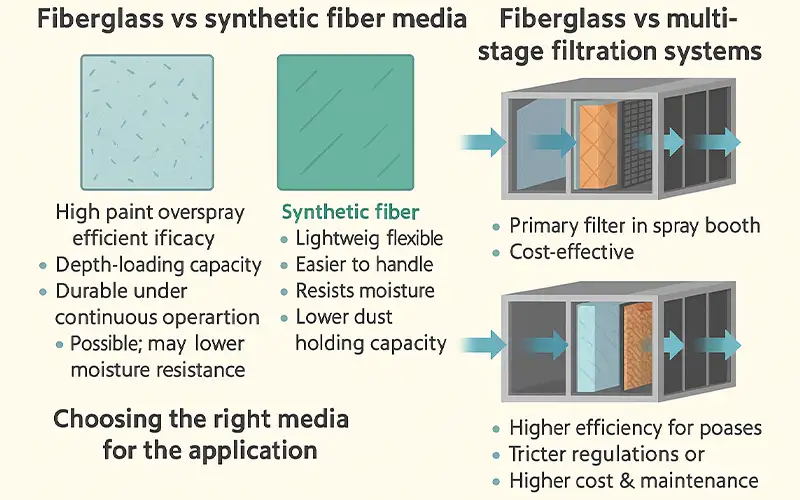
Fiberglass vs synthetic fiber media

Fiberglass paint stop filter media has long been the standard choice for spray booth filtration due to its high paint mist capture efficiency and depth-loading capacity. It is durable under continuous operation and works well in high-volume spray environments such as automotive and industrial coating. However, fiberglass media can be heavier, less resistant to moisture, and slightly more brittle compared to synthetic alternatives.

Synthetic fiber media, on the other hand, is lighter, more flexible, and often easier to handle during installation. It resists moisture and microbial growth, making it suitable for environments with variable humidity. While its dust-holding capacity can be lower than fiberglass, synthetic filters are often preferred for applications where ease of maintenance and longevity under humid conditions are critical.

Fiberglass vs multi-stage filtration systems

Fiberglass paint stop filters are typically used as primary filters in spray booths, capturing the majority of overspray before it reaches exhaust ducts. In facilities with stricter air quality requirements, fiberglass filters may be paired with secondary or tertiary filters, such as polyester pads, HEPA filters, or activated carbon layers. Multi-stage systems achieve higher overall efficiency, especially in environments requiring the removal of both particles and gaseous contaminants.

The trade-off is cost and maintenance: multi-stage systems are more expensive and require careful monitoring to avoid excessive pressure drop. Fiberglass alone remains a cost-effective solution for standard spray finishing operations, while multi-stage filtration is better suited for critical applications like aerospace, medical equipment coating, or facilities aiming to meet the most stringent environmental standards.

Choosing the right media for the application

  • Fiberglass: Best for high-volume automotive, furniture, and industrial paint shops.

  • Synthetic fiber: Suitable for variable humidity environments and operations needing lightweight, durable filters.

  • Multi-stage systems: Required in industries with strict compliance standards or where both particles and chemical pollutants must be controlled.

What Is Fiberglass Paint Stop Filter Media

Maintenance and Replacement Guidelines

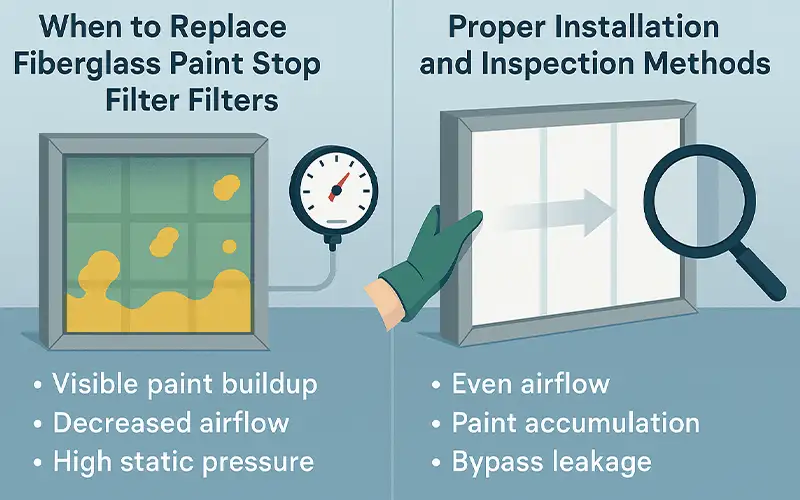
When to replace fiberglass paint stop filters

Fiberglass paint stop filter media should be replaced once it reaches its maximum paint-holding capacity. In most spray booth operations, this is indicated by visible paint buildup on the filter surface, reduced airflow through the booth, or an increase in static pressure across the filter. Operating with clogged filters can compromise finish quality, increase energy consumption, and shorten the life of the ventilation system. As a general guideline, filters should be inspected weekly and replaced every few weeks, depending on production volume and type of coatings used.

Proper installation and inspection methods

Correct installation is critical to ensure fiberglass paint stop filters perform effectively. Filters should be fitted securely within the frame, with no gaps that allow overspray to bypass the media. Airflow direction must follow the manufacturer’s recommendations, ensuring paint particles are captured in the progressively denser layers of the fiberglass mat.

During routine inspections, facility managers should check for:

  • Even airflow across the filter surface

  • Excessive paint accumulation or sagging media

  • Signs of bypass leakage around the edges

Replacing filters on time and installing them correctly helps maintain consistent booth performance, ensures compliance with air quality standards, and reduces the risk of costly rework. Regular maintenance also prolongs the service life of downstream components, such as fans and exhaust ducts, by preventing overspray buildup.

What Is Fiberglass Paint Stop Filter Media

Final Thoughts

Fiberglass paint stop filter media plays a critical role in maintaining clean and efficient spray booth operations. By effectively capturing paint overspray and fine mist particles, it helps protect workers, improve product quality, and extend the service life of exhaust systems. Its ability to balance high dust-holding capacity with reliable airflow makes it a proven solution for automotive, furniture, and industrial coating environments.

Choosing high-quality fiberglass paint stop filters is essential for ensuring consistent booth performance and compliance with environmental standards. Facilities that invest in durable, well-tested media benefit from lower maintenance costs, improved air quality, and reduced risk of rework or downtime. For spray operations that demand efficiency, safety, and regulatory compliance, fiberglass paint stop filter media remains one of the most effective and cost-efficient solutions available.

Clean-Link Offers High Quality Fiberglass Paint Stop Filter Media

Clean-Link offers a range of high-performance air filtration products designed for applications in various industries. Our solutions are tailored to improve indoor air quality and employee comfort.

Need Help Choosing the Right Air Filters for Your Facilities?

Selecting the right air filters for your facilities can be a challenging task, given the variety of filter types and specifications available. If you're unsure about which filter best suits your needs, our team of experts is here to help.

With years of experience in air filtration solutions, we can guide you in choosing the ideal filter to optimize your application's performance and ensure superior air quality.

Contact us today for personalized advice and assistance tailored to your specific requirements.

Previous article Air Filtration System Installation: Residential, Commercial, and Industrial Guide 2025
Next article Top 10 Air Filter Manufacturers in 2025: Global Leaders in Clean Air Solutions

Leave a comment

* Required fields