
Expert Support
Available 24/7 via chat
Available 24/7 via chat


ir filtration system installation is not just about putting a filter in place; it is a critical step that directly impacts efficiency, air quality, and long-term system performance. A properly executed air filter setup ensures that air moves smoothly through the system, maximizing filtration efficiency while minimizing unnecessary strain on HVAC equipment. Poor installation, by contrast, can lead to air leaks, bypass of contaminants, higher energy consumption, and premature system failures.
The benefits of air filtration systems extend far beyond cleaner air. In residential settings, correct installation helps protect families from dust, pollen, and allergens, contributing to healthier living environments.
In commercial buildings, proper air filter setup supports employee comfort and productivity while helping businesses comply with indoor air quality standards. For industrial facilities, installation accuracy is even more critical: it ensures compliance with safety regulations, protects sensitive equipment from contamination, and reduces costly downtime.
Whether in homes, offices, or large-scale industrial environments, correct installation is the foundation for reaping the full benefits of air filtration systems. It safeguards health, optimizes system performance, and provides peace of mind that air quality is being properly managed.
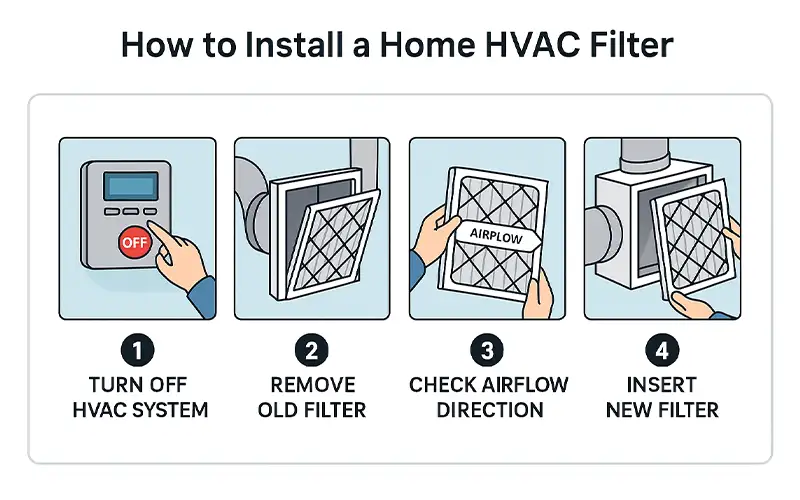
Installing or replacing filters in a residential air filtration system is one of the most important steps in maintaining clean air indoors. For a standard home HVAC filter installation or furnace filter replacement, the process typically includes:
Turning off the HVAC system before handling the filter.
Locating the filter slot, usually near the air return duct or furnace intake.
Removing the old filter carefully to avoid releasing trapped dust.
Checking the airflow arrows printed on the new filter to ensure correct placement.
Sliding the new filter into place and securing the cover.
Filters should generally be replaced every 60 to 90 days, though homes with pets, smokers, or allergy-sensitive occupants may require more frequent changes. The U.S. Environmental Protection Agency (EPA) notes that proper installation and maintenance of filters help improve indoor air quality and HVAC performance (EPA Indoor Air Quality Guide).
Beyond standard replacements, many homeowners choose advanced options such as whole-house air filter installation, which integrates high-efficiency filters directly into the central HVAC system.
These systems can be paired with HEPA add-ons to capture ultrafine particles like pollen and pet dander, or UV filters designed to neutralize bacteria and viruses. Such upgrades provide an extra layer of protection, particularly in homes with allergy sufferers or immunocompromised family members.
While many homeowners can handle basic furnace filter replacement, more complex systems often require professional installation.
Whole-house units, HEPA add-ons, and UV systems need precise fitting to ensure they work effectively without disrupting airflow. Professionals can also perform system checks to confirm efficiency and safety. Attempting advanced installation without the right expertise may lead to reduced effectiveness or even damage to HVAC components.
Some of the most common errors include installing filters backward, using the wrong filter size, failing to replace filters on schedule, or leaving gaps that allow air to bypass the filter entirely.
These mistakes compromise the effectiveness of the residential air filtration system, leading to poor indoor air quality and higher energy costs. Regular checks and proper installation methods are essential for consistent performance and long-term savings.
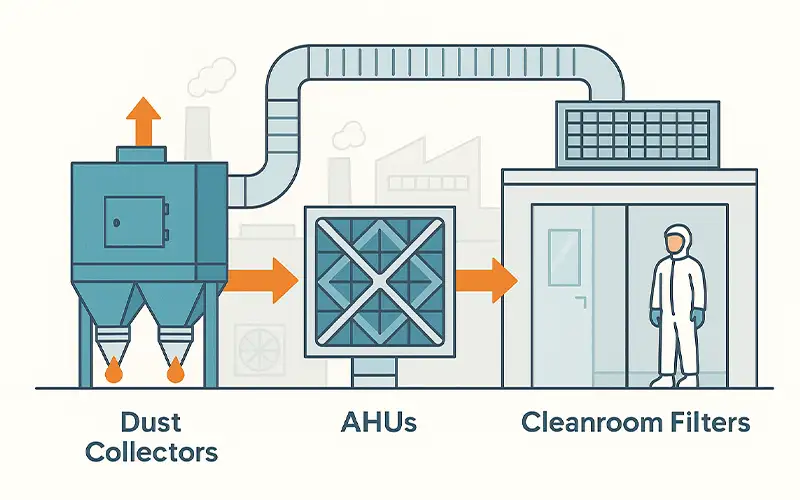
Industrial air filtration system installation requires a more complex approach than residential or commercial applications. Facilities such as factories, laboratories, and cleanrooms depend on advanced solutions like dust collector installation, AHU filters (air handling unit filters), and specialized cleanroom air filters.
These systems are engineered to handle high volumes of air and remove a wide range of contaminants, from coarse dust and fumes to ultrafine particles and microbes. Proper sizing, placement, and installation are critical to ensuring reliable airflow and maintaining required cleanliness levels in industrial environments.
Installing or upgrading industrial filtration systems often involves planned downtime, as entire production lines or facility zones may need to be temporarily shut down. Safety protocols must be strictly followed, not only to protect workers but also to prevent contamination of sensitive processes.
Compliance with industry-specific regulations, such as ISO cleanroom standards or OSHA workplace safety guidelines, is a key factor in planning installations. Properly installed dust collectors and AHU filters also reduce fire hazards by minimizing the accumulation of combustible dust, contributing to safer operations.
Global leaders such as Camfil, Freudenberg, and AAF demonstrate the importance of tailoring solutions to specific industrial needs. For example:
Camfil offers high-performance cleanroom air filters that meet stringent ISO classifications for pharmaceutical and semiconductor facilities.
Freudenberg provides durable AHU filters designed to optimize airflow and energy efficiency in large-scale HVAC systems.
AAF specializes in dust collector installation solutions for heavy manufacturing, ensuring both regulatory compliance and worker protection.
These case references show that successful industrial air filtration system installation requires not only technical expertise but also an understanding of sector-specific challenges.
Choosing the right partner and following best practices ensures cleaner air, regulatory compliance, and long-term operational efficiency.
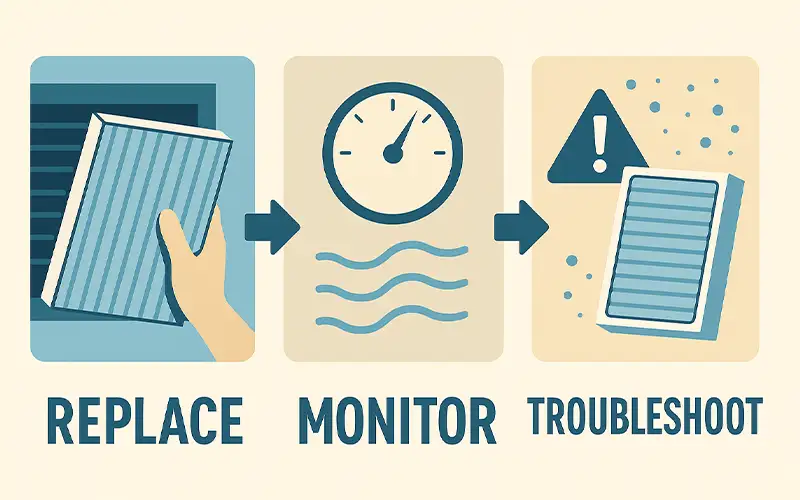
Following a consistent air filter replacement schedule is essential for keeping filtration systems effective. In residential applications, filters should generally be replaced every 60 to 90 days, though homes with pets, smokers, or allergy-sensitive occupants may require more frequent changes.
In commercial buildings, HVAC filter maintenance often follows a 30- to 60-day cycle depending on occupancy and pollutant levels. Industrial environments typically operate under heavier contaminant loads, so filters such as AHU filters or dust collector cartridges may need replacement every few weeks or according to manufacturer specifications. Adhering to these timelines ensures filters continue to capture contaminants effectively without straining the system.
One of the best indicators of filter performance is the pressure drop across the filter. As contaminants accumulate, airflow resistance increases, making the HVAC system work harder and consume more energy.
Installing differential pressure gauges allows facility managers to track when filters are approaching their dust-holding limit. Consistent monitoring helps schedule replacements before filters become clogged, preventing unexpected downtime or reduced system performance.
Even with a regular maintenance routine, installation issues can compromise performance. Common problems include filters installed backwards, improper sealing that allows bypass air, or using filters with the wrong MERV rating for the system.
Air filter troubleshooting should begin with visual inspections—checking for gaps, sagging media, or uneven dust accumulation. If airflow problems persist, reviewing system compatibility and consulting manufacturer guidelines can help identify mismatches between filter type and HVAC design.
Addressing these issues early not only restores efficiency but also prevents long-term damage to equipment.


Leave a comment