
Expert Support
Available 24/7 via chat
Available 24/7 via chat

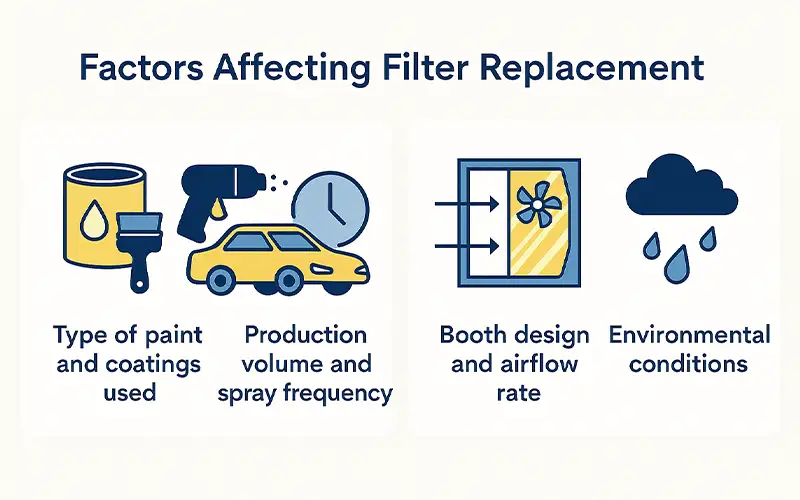
The frequency of paint booth filter changes depends on several factors, each of which can impact booth performance, safety, and compliance.
Solvent-based coatings typically generate more sticky residues that saturate filters faster than water-based paints.
The U.S. Environmental Protection Agency (EPA) highlights that solvent-based products contribute more to volatile organic compound (VOC) emissions, requiring stricter control and more frequent filter changes (EPA Spray Coating Regulations).
High-volume operations such as automotive plants or industrial coating lines generate large amounts of overspray. This results in filters reaching their holding capacity much sooner compared to smaller-scale workshops.
Facilities with continuous spraying often need weekly or biweekly filter changes to maintain efficiency.
Crossdraft, downdraft, and side-draft spray booths handle airflow differently, which influences how quickly filters become loaded with paint particles. Properly balanced airflow slows filter clogging, while poor ventilation accelerates buildup and increases energy use.
The Occupational Safety and Health Administration (OSHA) also stresses the importance of maintaining ventilation efficiency to protect workers in spray finishing operations (OSHA Spray Finishing Standards).
Booths located in dusty or high-humidity environments experience faster filter saturation. Excess dust and moisture not only clog filters more quickly but may also reduce filter efficiency or cause microbial growth in certain media types.
By accounting for these factors, spray booth operators can set realistic replacement schedules that minimize risks while optimizing cost-efficiency.
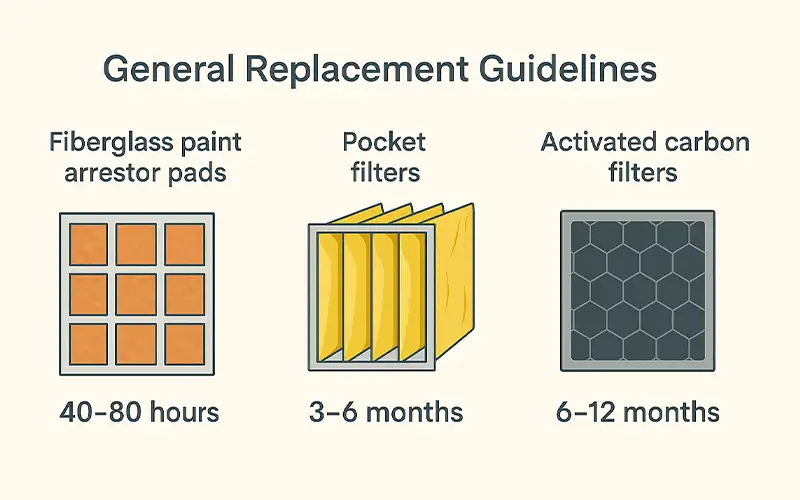
Fiberglass paint arrestor pads are the first line of defense in many spray booths. They are designed to capture large paint droplets and overspray before air reaches downstream filters or ductwork.
These pads typically need replacement every 40–80 hours of spraying, depending on the volume of paint used and the type of coating applied.
Frequent inspection is necessary, as heavily loaded pads can quickly restrict airflow and reduce booth performance.
Pocket filters serve as secondary filtration, designed to capture finer particles that escape primary filters. Their deep-pocket design allows for higher dust-holding capacity, making them suitable for high-volume operations.
In most commercial and industrial spray booths, pocket filters should be replaced every 3–6 months, though environments with heavy paint loads may require more frequent changes.
The American Society of Heating, Refrigerating and Air-Conditioning Engineers (ASHRAE) recommends monitoring filter efficiency to maintain air quality and system performance (ASHRAE Filtration Guidance).
Activated carbon filters are used when spray coatings release volatile organic compounds (VOCs) or odors that must be controlled for environmental or safety reasons.
These filters adsorb gaseous contaminants and are typically replaced when VOC breakthrough occurs or every 6–12 months. Monitoring odors in the booth and reviewing manufacturer recommendations ensures timely replacement.
The U.S. Environmental Protection Agency (EPA) highlights the importance of using the correct filters to reduce VOC emissions and maintain compliance with the Clean Air Act (EPA Spray Coating Regulations).
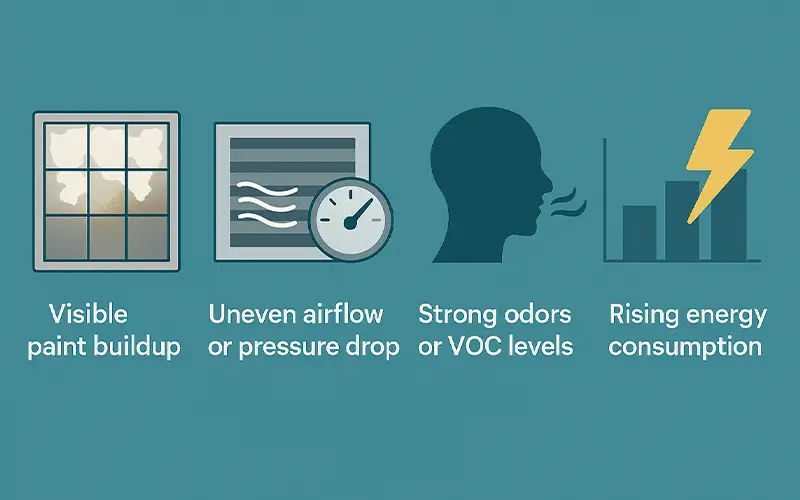
When filters show noticeable layers of paint on the surface, it is a clear indicator they are clogged and no longer functioning effectively.
Visible buildup prevents proper airflow, reduces filtration efficiency, and increases the risk of paint particles contaminating the work area.
Filters nearing the end of their service life often cause uneven airflow inside the booth. This can lead to inconsistent coating quality and poor finish results.
A measurable increase in pressure drop across the filter is another strong sign that replacement is needed to avoid strain on the ventilation system.
If paint fumes or odors become more noticeable in the booth, it suggests that filters are no longer capturing volatile organic compounds (VOCs) effectively.
This not only affects worker comfort but also indicates that activated carbon or secondary filters have reached their saturation point and must be replaced.
Clogged filters force the HVAC or exhaust system to work harder to pull air through, which increases energy usage.
A sudden rise in energy bills or unusual system strain often points to filters that are overdue for replacement.
Addressing this promptly helps maintain efficiency and prevents unnecessary wear on equipment.
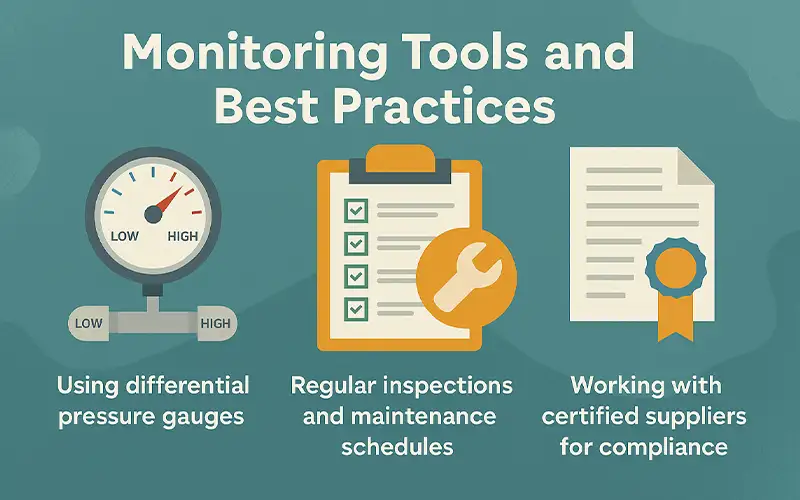
One of the most effective ways to track filter performance is through differential pressure gauges. These tools measure the pressure drop across the filter, indicating how much resistance the filter is creating as it loads with paint overspray.
A steady increase in pressure drop signals that the filter is nearing the end of its useful life and should be replaced before airflow and efficiency are compromised.
Routine inspections are critical to ensure spray booth filters remain effective. Operators should visually check for paint buildup, sagging filter media, and signs of air bypass around the filter frame.
Establishing a maintenance schedule tailored to production volume and coating type helps prevent unexpected downtime and ensures consistent overspray control.
Partnering with certified filter suppliers ensures that replacement media meets industry standards for efficiency, fire safety, and environmental compliance.
Certified products help facilities align with OSHA, EPA, and NFPA guidelines, reducing regulatory risks while improving worker safety and product quality.
Reliable suppliers also provide documentation and recommendations to support compliance during inspections or audits.


Leave a comment