
Expert Support
Available 24/7 via chat
Available 24/7 via chat

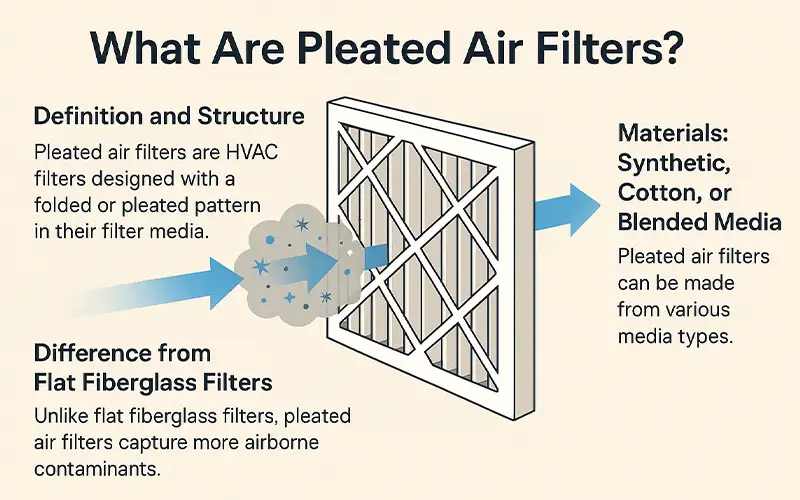
Pleated Air Filters are HVAC filters designed with a folded or pleated pattern in their filter media. This pleating increases the surface area, allowing the filter to capture more dust, pollen, and fine particles without restricting airflow.
Because of their enhanced surface coverage, Pleated Air Filters provide higher efficiency and longer service life compared to basic flat filters.
Unlike flat fiberglass filters, which use a thin, flat sheet of media, Pleated Air Filters are engineered to trap a wider range of airborne contaminants.
Flat filters mainly capture large particles and provide minimal protection against allergens or finer dust. Pleated designs, on the other hand, can effectively reduce smaller particulates such as pet dander and mold spores, making them a better option for households and businesses concerned with indoor air quality.
The U.S. Department of Energy notes that higher-quality filters, like pleated types, can improve HVAC performance by keeping coils and ducts cleaner.
Pleated Air Filters can be made from various media types. Synthetic fibers are commonly used because they are durable, resistant to moisture, and less prone to microbial growth. Cotton-based filters are effective for trapping fine particles but may require more frequent replacement in humid conditions.
Some filters use blended media that combine synthetic and natural fibers, providing both durability and precision filtration.
According to the EPA, the choice of filter media influences not only efficiency but also airflow resistance and energy use, which are critical considerations in HVAC systems.
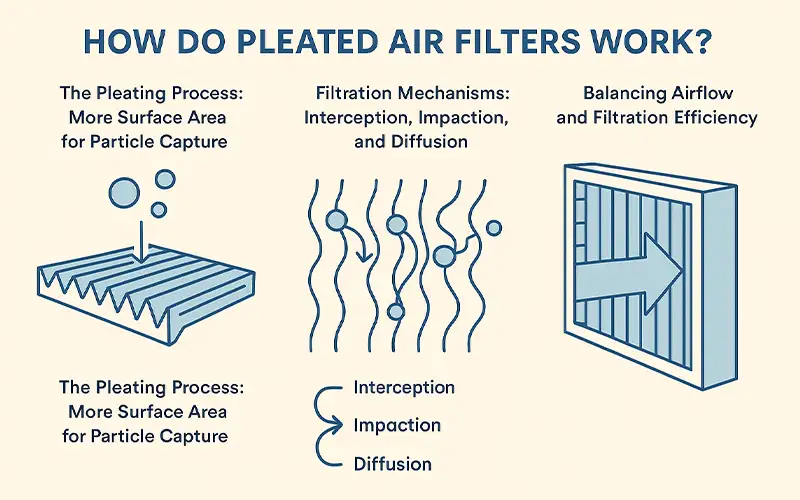
Pleated Air Filters are designed with folds in the filter media, which significantly increase the available surface area. This added area allows the filter to hold more dust and debris while maintaining airflow.
As a result, Pleated Air Filters can last longer and provide better protection for HVAC systems compared to flat-panel filters. More surface coverage means they capture a greater volume of particles without clogging as quickly.
Pleated Air Filters remove contaminants through several filtration mechanisms:
Interception: Particles following the airstream come into direct contact with filter fibers and stick to them.
Impaction: Larger particles deviate from airflow paths and are trapped when they collide with filter fibers.
Diffusion: Ultrafine particles move randomly and are more likely to collide with fibers, increasing capture efficiency.
These combined methods allow Pleated Air Filters to capture both large dust particles and smaller pollutants such as pollen, mold spores, and pet dander.
The Environmental Protection Agency (EPA) explains that filters using multiple mechanisms are more effective at improving indoor air quality.
A common concern with high-efficiency filters is airflow restriction. Pleated Air Filters solve this by providing more media surface area, which balances filtration efficiency with low resistance to airflow.
This means HVAC systems do not have to work harder to circulate air, reducing energy consumption and avoiding unnecessary strain on equipment.
According to ASHRAE, selecting the correct Minimum Efficiency Reporting Value (MERV) ensures a filter meets air quality goals without compromising system performance.
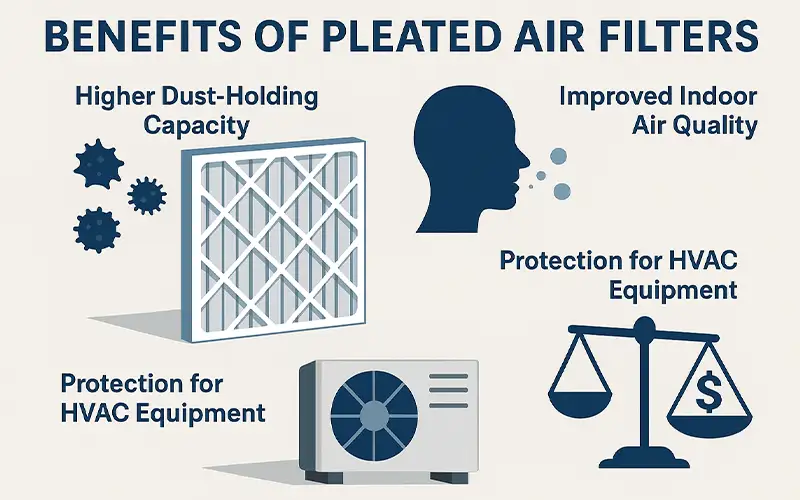
One of the biggest advantages of Pleated Air Filters is their ability to hold more dust and debris than standard flat filters.
The pleated design increases the surface area, which means more particles are captured before the filter becomes clogged. This not only extends the filter’s service life but also reduces the frequency of replacements.
Pleated Air Filters provide superior filtration compared to basic fiberglass models.
They can capture smaller airborne particles such as pollen, pet dander, and mold spores, which helps reduce allergy symptoms and respiratory irritation. For households and businesses, this translates into healthier indoor environments with cleaner, fresher air.
By trapping fine dust and contaminants, Pleated Air Filters prevent buildup on coils, fans, and ducts. Cleaner HVAC components operate more efficiently, require less maintenance, and last longer.
This protective function reduces repair costs and helps maintain consistent heating and cooling performance throughout the building.
Pleated Air Filters offer a practical balance between performance and affordability. They provide higher efficiency without drastically restricting airflow, making them suitable for a wide range of residential, commercial, and light industrial applications. For many facilities, they represent the best balance of cost-effectiveness and air quality improvement.
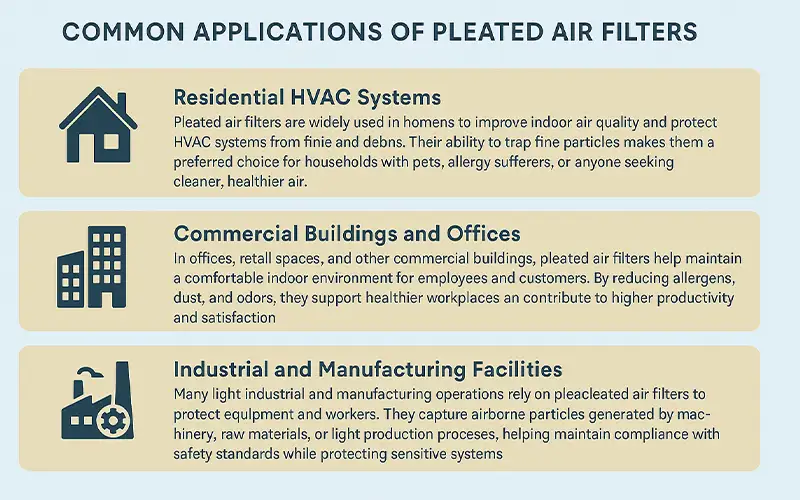
Pleated Air Filters are widely used in homes to improve indoor air quality and protect HVAC systems from dust and debris. Their ability to trap fine particles makes them a preferred choice for households with pets, allergy sufferers, or anyone seeking cleaner, healthier air.
In offices, retail spaces, and other commercial buildings, Pleated Air Filters help maintain a comfortable indoor environment for employees and customers. By reducing allergens, dust, and odors, they support healthier workplaces and contribute to higher productivity and satisfaction.
Many light industrial and manufacturing operations rely on Pleated Air Filters to protect equipment and workers. They capture airborne particles generated by machinery, raw materials, or light production processes, helping maintain compliance with safety standards while protecting sensitive systems.
In healthcare facilities, laboratories, and other sensitive settings, Pleated Air Filters often serve as prefilters in multi-stage filtration systems. By capturing larger particles, they extend the life of higher-efficiency filters like HEPA and ensure more consistent air quality control.
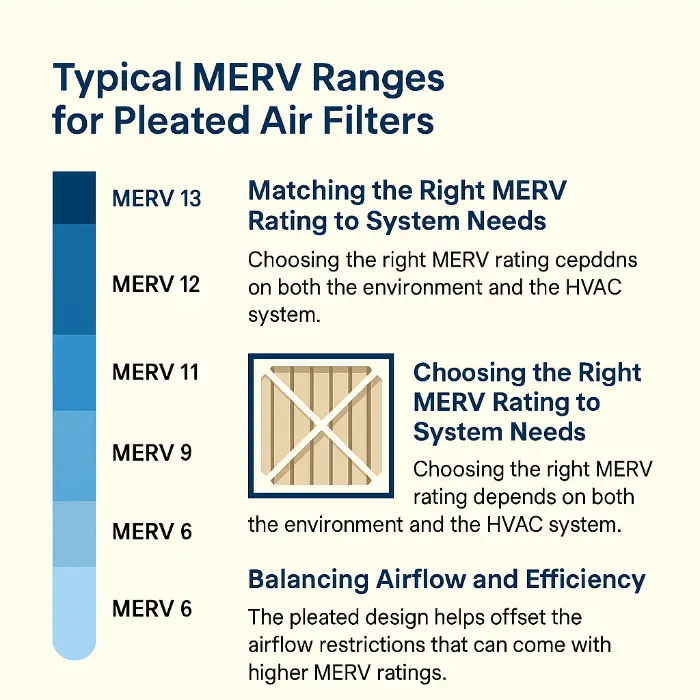
Pleated Air Filters are available in a wide range of Minimum Efficiency Reporting Values (MERV), typically between MERV 6 and MERV 13.
Lower-MERV pleated filters capture common dust and lint, while higher-rated options are designed to trap smaller particles such as pollen, mold spores, and fine dust. For most homes, a MERV 8–11 pleated filter provides a strong balance of air quality and airflow.
Choosing the right MERV rating depends on both the environment and the HVAC system. While higher ratings capture finer particles, they may also create more resistance to airflow if the system is not designed to handle them.
For example, residential systems usually perform best with MERV 8–11 Pleated Air Filters, while commercial or healthcare settings may require MERV 13 or higher for added protection.
The pleated design helps offset the airflow restrictions that can come with higher MERV ratings. By providing more surface area, Pleated Air Filters maintain efficiency without overburdening HVAC systems.
This balance ensures better indoor air quality while protecting system performance and minimizing energy consumption.
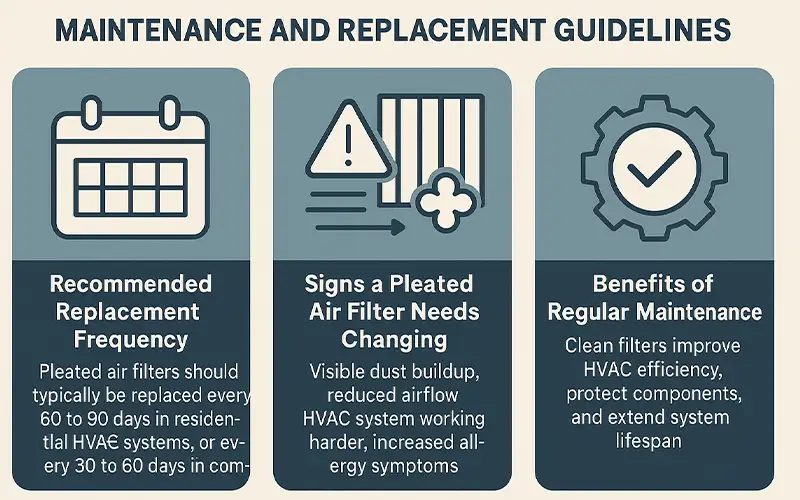
Pleated Air Filters should typically be replaced every 60 to 90 days in residential HVAC systems.
In commercial buildings or environments with heavier usage—such as shops, healthcare facilities, or spaces with pets and smokers—filters may need replacement every 30 to 60 days. Consistent replacement ensures the filters maintain their efficiency and keep air quality at healthy levels.
Even with standard timelines, it’s important to watch for signs that a filter is overdue for replacement. Indicators include:
Visible dust buildup on the filter surface
Reduced airflow from vents
HVAC system working harder or running longer cycles
Increased allergy or asthma symptoms indoors
Sticking to a regular replacement schedule ensures that Pleated Air Filters capture contaminants effectively without becoming clogged.
Clean filters protect HVAC components, improve energy efficiency, and help maintain consistent comfort throughout the building. Proactive maintenance also extends the overall lifespan of heating and cooling systems, reducing unexpected repair costs.


Leave a comment