Common pitfalls (and fixes)
Roll media performs best when size, basis weight, and mechanics match your booth. These are the most frequent issues—and how to prevent them.
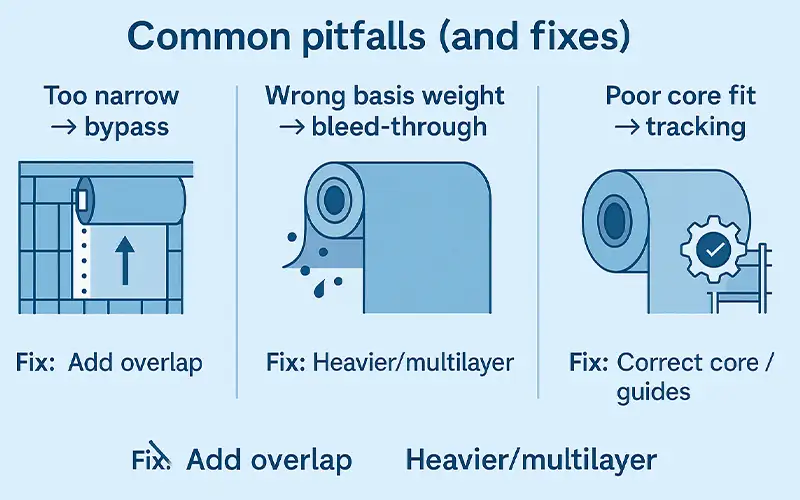
Too-narrow rolls → bypass
Problem
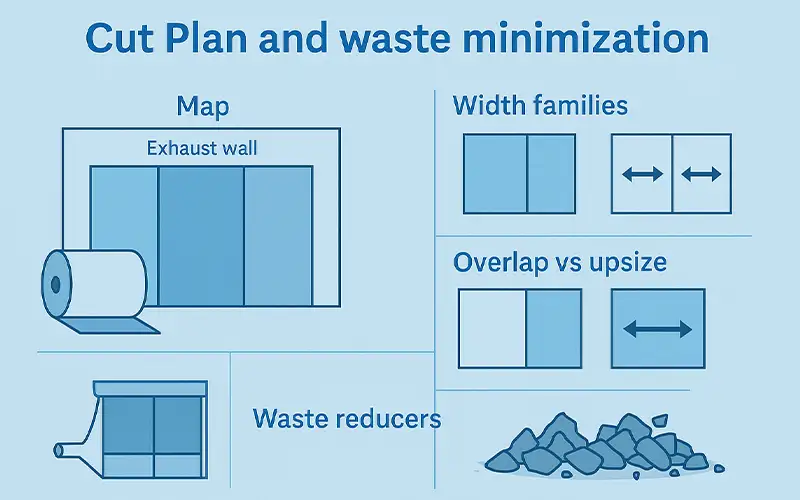
When roll width is less than clear bay width plus side-seal allowance, air slips past the media edges. Overspray escapes, ΔP trends look deceptively low, and downstream components foul.
Fix
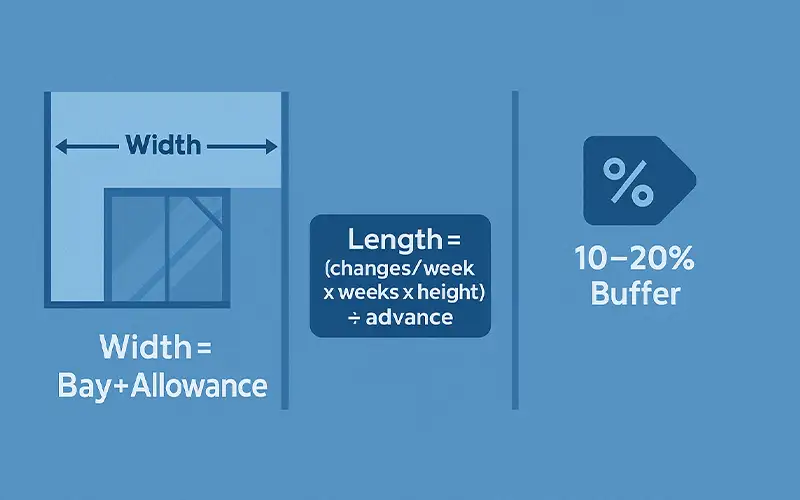
• Measure clear bay width between seals and add 25–50 mm total for overlap.
• Standardize a cut list per booth model; verify edge alignment during install.
• If seals are worn or irregular, upsize one width class or refurbish the seals before next install.
Wrong basis weight → bleed-through
Problem
Media that is too light for your face velocity or coating load saturates quickly. Overspray prints through, ΔP rises fast, and you advance or change rolls more often.
Fix
• Match basis weight to velocity and paint load; step up to heavier or multilayer media for high-load lines.
• If mesh/span is wide, choose stiffer media to resist sag and hold depth loading.
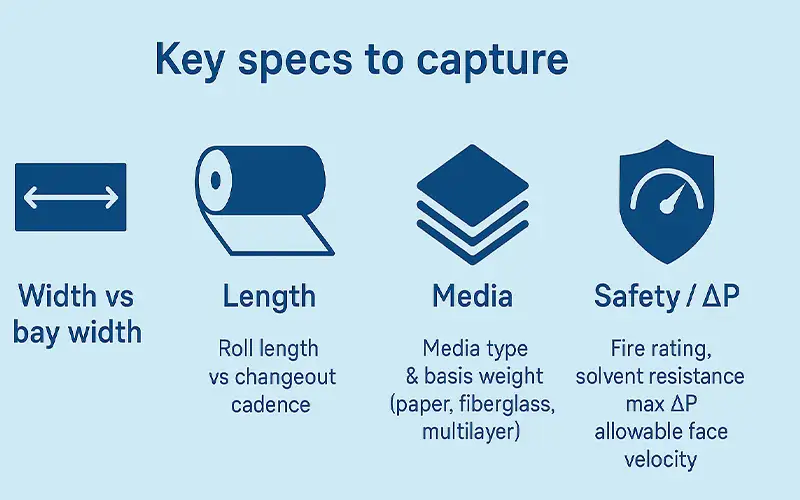
• Confirm maximum recommended ΔP and set your final ΔP below that limit.
Poor core fit → tracking issues
Problem
A loose, mismatched, or out-of-round core slips on the drive shaft. The web walks, wrinkles, or jams, wasting media and time.
Fix
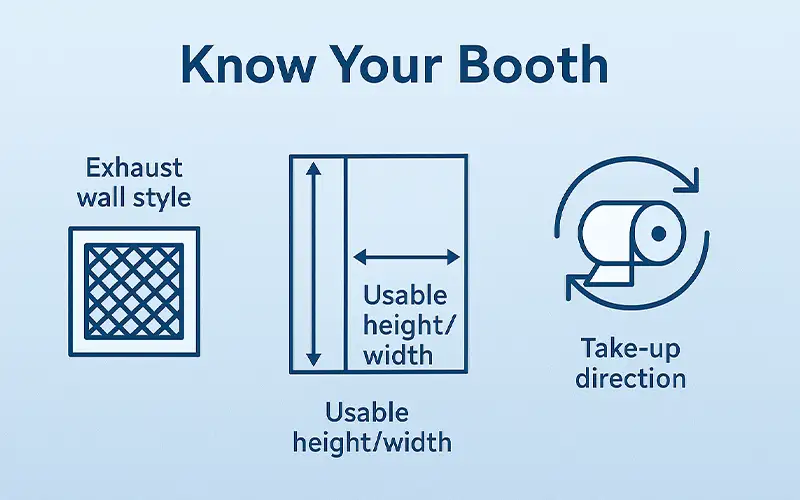
• Specify the correct core ID and material (paper vs plastic) for your take-up hardware.
• Check shaft condition, brakes, and guides; replace worn collars and add edge guides if drift is recurring.
• Limit roll diameter and weight to what the motor/brake can handle; use shorter rolls if torque is marginal.
Quick prevention checklist
• Width: bay width + 25–50 mm overlap, verified at install.
• Media: basis weight matched to velocity and load; multilayer for heavy overspray.
• Mechanics: correct core ID, smooth guides, and take-up torque within spec.
• Controls: final ΔP setpoint below media max; log clean ΔP and trend weekly.





Leave a comment