
Expert Support
Available 24/7 via chat
Available 24/7 via chat

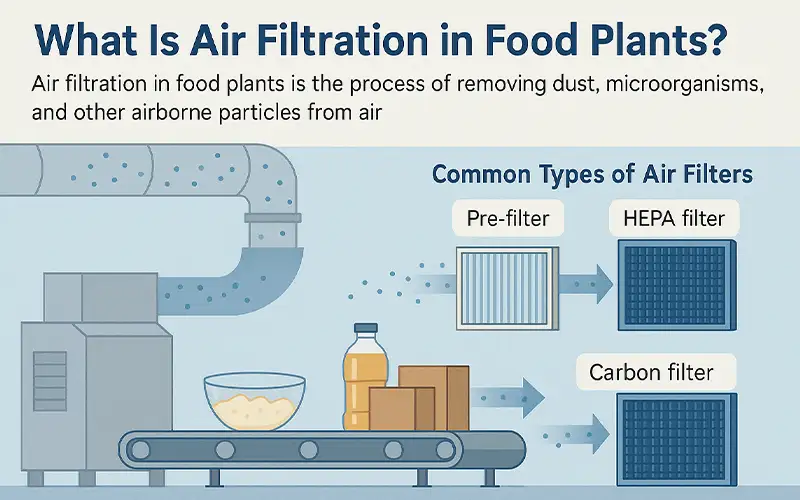
Air filtration in food plants refers to the process of removing dust, microorganisms, and other airborne particles from the air before it comes into contact with food products or processing equipment.
Clean air is essential to maintaining hygiene, preventing spoilage, and ensuring that food meets regulatory standards. Without proper filtration, invisible contaminants can compromise both safety and quality.
Food factories typically use multiple layers of filtration to capture particles of different sizes:
Pre-filters: Capture large particles such as dust and lint, protecting higher-grade filters from clogging too quickly.
HEPA filters: High-Efficiency Particulate Air filters can trap at least 99.97% of particles as small as 0.3 microns, making them effective against bacteria, mold spores, and fine dust. They are widely recommended for controlled environments, including food and pharmaceutical facilities (U.S. Environmental Protection Agency).
Carbon filters: Used to remove odors, gases, and volatile organic compounds (VOCs) that can affect taste or smell in sensitive food products.
In most food production facilities, air filters are integrated into HVAC (Heating, Ventilation, and Air Conditioning) systems. The HVAC system draws in outside air, circulates it through layers of filtration, and delivers clean air to production zones.
By maintaining positive air pressure in critical areas, these systems help prevent unfiltered air from entering sensitive spaces such as packaging or filling lines.
Properly designed HVAC and filtration systems are part of compliance with international standards like ISO 16890 for filter performance and HACCP-based food safety management systems (Food and Agriculture Organization of the United Nations). These guidelines ensure that filtration not only protects consumers but also supports regulatory approval and brand reputation.
Air filtration is more than a technical requirement in food production—it is a frontline defense against contamination. By ensuring that the air circulating within facilities is clean, manufacturers can safeguard both their products and their reputation.
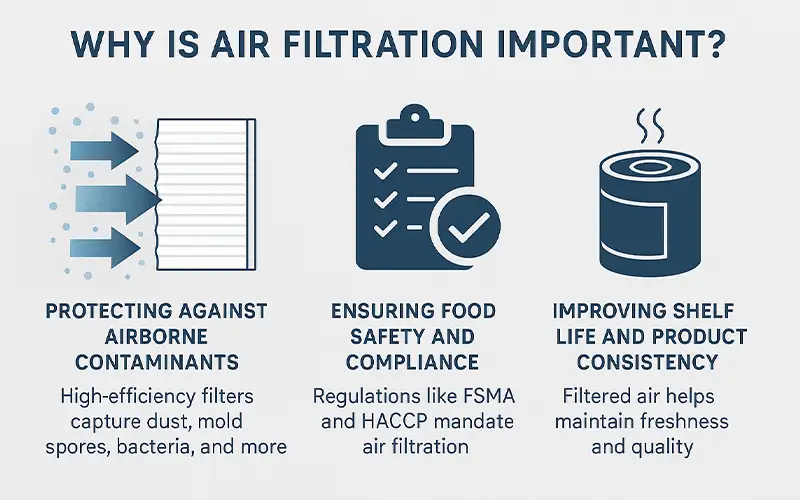
Air inside processing plants can carry dust, mold spores, bacteria, and other invisible particles. These contaminants may settle on raw materials, equipment, or finished goods, leading to microbial growth or product spoilage.
High-efficiency filters, especially HEPA-grade, are effective in capturing these harmful particles and reducing the risk of contamination events. The U.S. Centers for Disease Control and Prevention notes that airborne transmission of pathogens is a major factor in indoor environments (CDC).
Regulatory frameworks such as the Food Safety Modernization Act (FSMA) and Hazard Analysis and Critical Control Points (HACCP) require strict environmental controls in food facilities.
Air filtration is a key part of these controls, helping companies demonstrate compliance during audits and inspections.
Failure to maintain clean air standards may result in costly recalls, penalties, or loss of certifications. More information on HACCP principles can be found at the U.S. FDA.
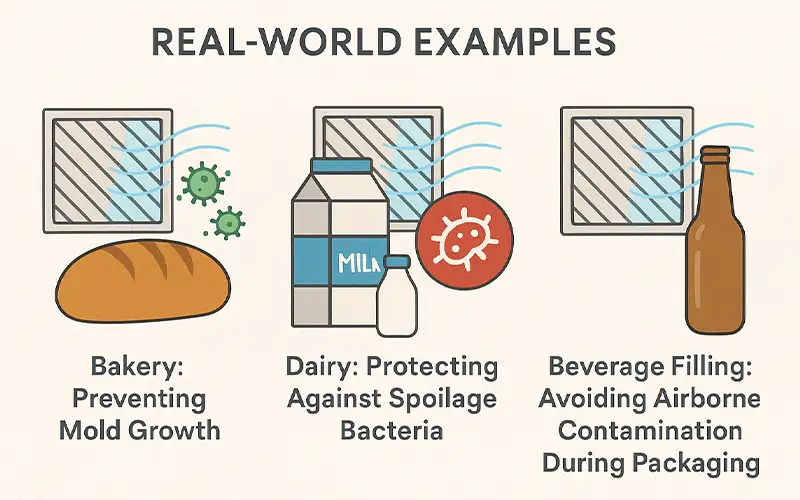
Consistent air quality directly impacts the freshness and stability of food products. For example, filtered environments help bakeries reduce mold growth, dairy plants protect against spoilage organisms, and beverage facilities prevent airborne contamination during filling.
By minimizing exposure to airborne particles, manufacturers can extend shelf life, maintain flavor integrity, and deliver the same quality across every batch.
In short, air filtration is not just about clean air—it is about ensuring safety, compliance, and consumer trust in every product that leaves the factory.
Air filtration in food plants is not an abstract concept—it has direct, practical applications in everyday production.
Different sectors of the food and beverage industry rely on clean air to maintain safety, extend shelf life, and protect brand integrity.
Bakeries are especially vulnerable to airborne mold spores, which thrive in warm, humid environments. Even a small number of spores in the air can land on fresh bread or pastries, causing visible mold within days.
Multi-stage filtration systems with HEPA filters can significantly reduce mold contamination and extend the freshness of their products in mixing, proofing, and packaging areas, bakeries.
Dairy products such as milk, cheese, and yogurt are highly sensitive to airborne microorganisms. Bacteria in the air can quickly spoil raw milk or contaminate finished dairy products during processing.
Air filtration systems in dairy plants maintain controlled environments, reducing bacterial exposure and helping facilities comply with strict hygiene standards.
This ensures that dairy products remain safe and retain their intended flavor and nutritional value.
In beverage production, the filling and packaging stage is one of the most critical points for contamination. Airborne particles, bacteria, or yeast can easily enter bottles or cans during filling, compromising product safety and stability.
To counter this, many beverage plants install high-efficiency air filtration and positive pressure systems around bottling lines. This creates a clean-air barrier that keeps contaminants out, ensuring every bottle reaches consumers with the same level of safety and quality.
While food safety is the primary reason for installing air filtration systems in processing plants, the advantages extend far beyond protecting products.
Clean, well-filtered air also supports the people, equipment, and reputation that keep food businesses running successfully.
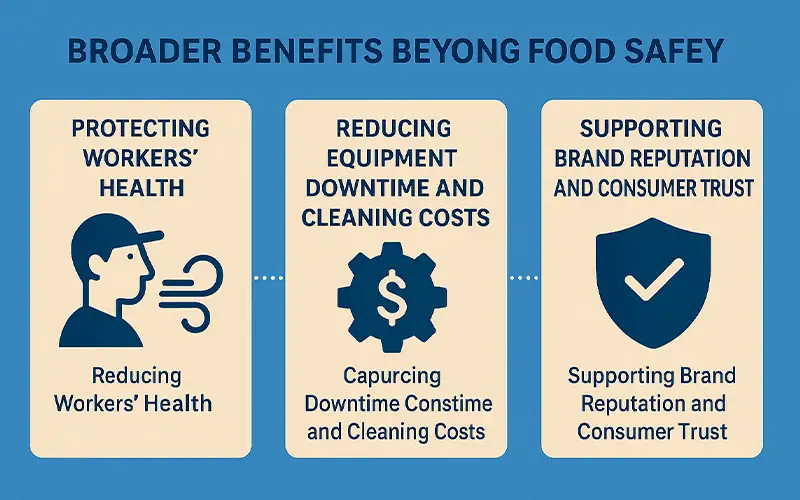
Food processing environments often involve dust, allergens, and fine particles that can affect the respiratory health of employees. Effective air filtration reduces these airborne hazards, creating a safer and more comfortable workplace.
Improving indoor air quality can lower the risk of respiratory issues, minimize absenteeism, and promote overall employee well-being.
Dust and particles circulating in the air do not just affect food—they also build up on machinery and production lines. This accumulation increases wear and tear, leads to more frequent cleaning, and can even cause unplanned downtime.
Filtration systems can capture particles before they settle, extending the life of equipment, reducing maintenance needs, and lowering overall operating costs.
Consumers expect safe, high-quality food every time they purchase a product. A single contamination incident or product recall can damage years of trust and investment in brand reputation.
Air filtration serves as a behind-the-scenes safeguard that supports consistency and reliability.
Companies that invest in clean air systems show a clear commitment to food safety, which helps reassure customers, strengthen brand loyalty, and maintain a competitive edge in the market.
As the food and beverage industry evolves, air filtration technologies are also advancing to meet new challenges.
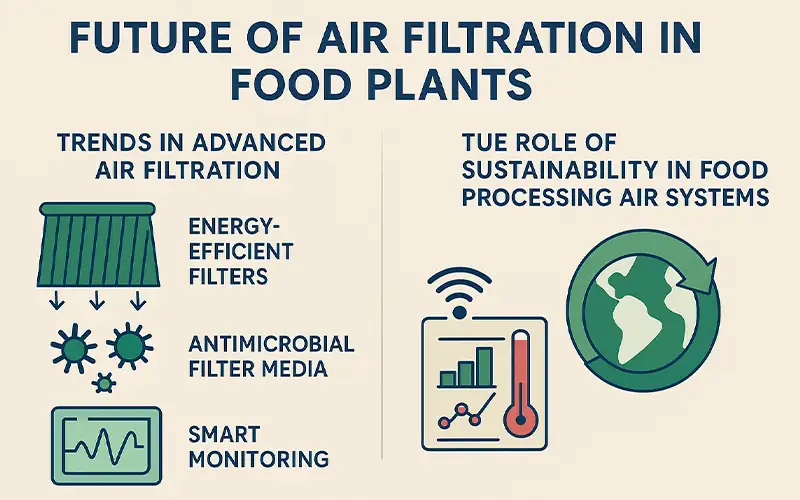
Future systems are not only focused on safety but also on efficiency, sustainability, and smart integration.
Modern food plants are increasingly adopting next-generation filtration solutions designed to deliver higher performance with lower costs.
Energy-efficient filters: New designs reduce resistance to airflow, cutting down on energy consumption while still maintaining high capture efficiency.
Antimicrobial filter media: These filters are engineered to inhibit the growth of bacteria and mold on the filter surface itself, reducing risks of recontamination and extending filter life.
Smart monitoring: With sensors and IoT integration, plants can now monitor filter performance in real time. This allows for predictive maintenance, ensuring filters are replaced only when needed rather than on fixed schedules.
Sustainability has become a driving factor across the food industry, and air filtration is no exception.
Manufacturers are moving toward filters that require less energy to operate, are made with recyclable materials, and offer longer lifespans to reduce waste.
Optimizing filtration not only helps companies meet environmental goals but also aligns with consumer expectations for greener production practices.
The future of air filtration in food plants will combine strict safety requirements with smart, sustainable, and cost-effective technologies, ensuring that both people and products benefit from cleaner air.


Leave a comment