
Expert Support
Available 24/7 via chat
Available 24/7 via chat
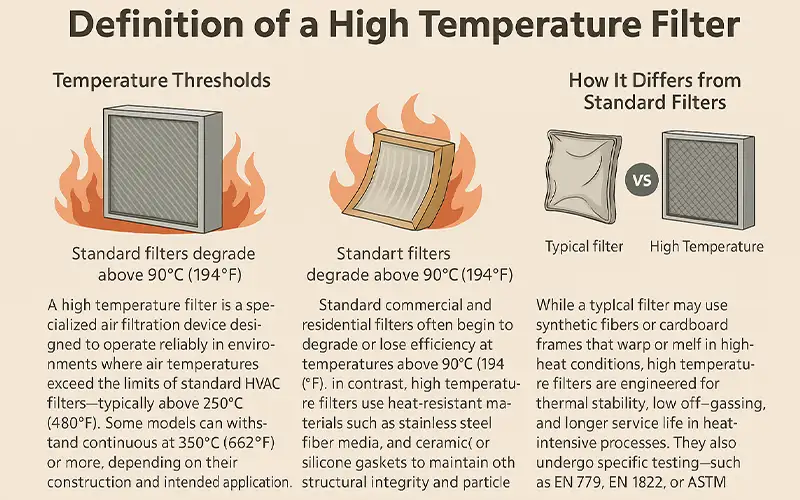
A high temperature filter is a specialized air filtration device designed to operate reliably in environments where air temperatures exceed the limits of standard HVAC filters—typically above 250°C (480°F).
Some models can withstand continuous operation at 350°C (662°F) or more, depending on their construction and intended application.
Standard commercial and residential filters often begin to degrade or lose efficiency at temperatures above 90°C (194°F). In contrast, high temperature filters use heat-resistant materials such as stainless steel frames, high-grade glass fiber media, and ceramic or silicone gaskets to maintain both structural integrity and particle capture efficiency under extreme heat.
While a typical filter may use synthetic fibers or cardboard frames that warp or melt in high-heat conditions, high temperature filters are engineered for thermal stability, low off-gassing, and longer service life in heat-intensive processes. They also undergo specific testing—such as EN 779, EN 1822, or ASTM high-temperature endurance standards—to ensure performance.
For more details on high temperature filter standards, you can refer to the ASHRAE guidelines on air filtration or the U.S. Department of Energy’s HVAC filtration resources.
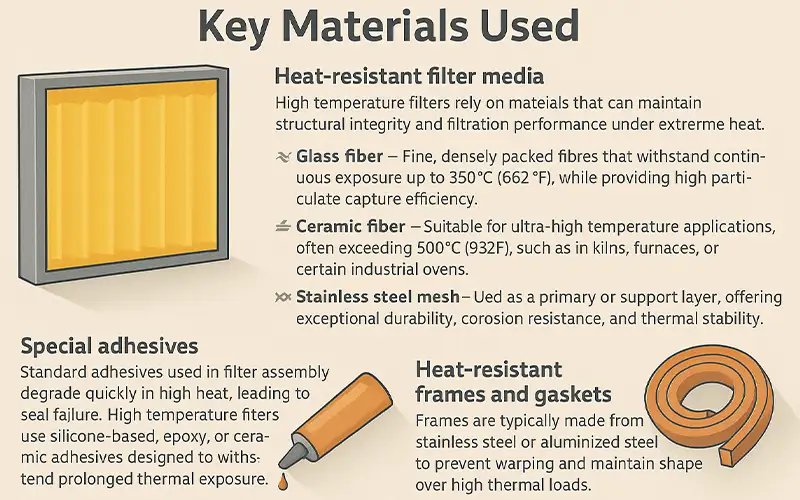
High temperature filters rely on materials that can maintain structural integrity and filtration performance under extreme heat. Common media include:
Glass fiber – Fine, densely packed fibers that withstand continuous exposure to temperatures up to 350°C (662°F) while providing high particulate capture efficiency.
Ceramic fiber – Suitable for ultra-high temperature applications, often exceeding 500°C (932°F), such as in kilns, furnaces, or certain industrial ovens.
Stainless steel mesh – Used as a primary or support layer, offering exceptional durability, corrosion resistance, and thermal stability.
Standard adhesives used in filter assembly can degrade quickly in high heat, leading to seal failure. High temperature filters use silicone-based, epoxy, or ceramic adhesives designed to withstand prolonged thermal exposure without releasing volatile compounds.
Frames are typically made from stainless steel or aluminized steel to prevent warping and maintain shape under high thermal loads. Gaskets are often fabricated from high-temperature silicone, fiberglass rope, or ceramic fiber to ensure an airtight seal between the filter and its housing, preventing unfiltered air bypass.
These specialized materials not only extend the filter’s lifespan but also ensure compliance with performance and safety standards in demanding industrial environments.
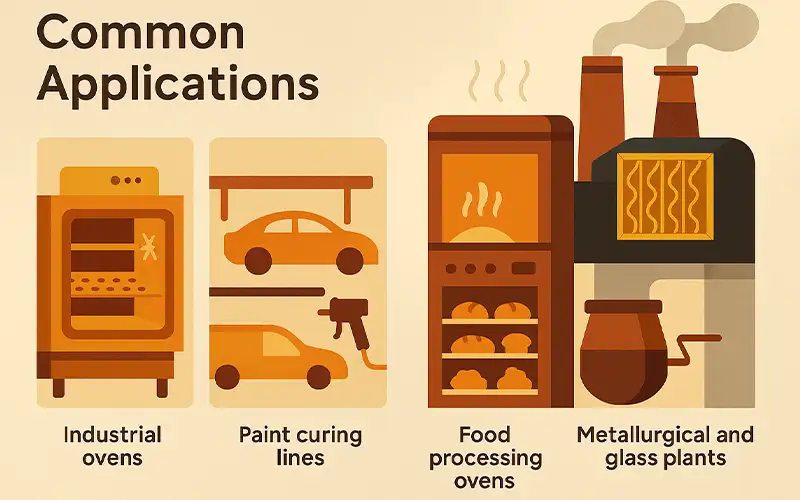
High temperature filters are essential in industrial ovens used for processes such as powder coating, electronics curing, and material drying. They prevent airborne contaminants from settling on products, ensuring consistent quality and compliance with manufacturing standards.
In automotive and industrial paint facilities, curing lines operate at elevated temperatures to harden coatings. High temperature filters protect painted surfaces from dust, overspray particles, and other contaminants that could compromise finish quality.
Bakeries, snack production lines, and meat processing facilities often use ovens operating at sustained high temperatures. Filters in these systems help maintain hygiene by capturing food particles, grease aerosols, and airborne debris, supporting food safety standards like HACCP and ISO 22000.
In metallurgy and glass manufacturing, extreme heat is a constant. High temperature filters capture fine particulate matter, metallic dust, and combustion byproducts generated during smelting, refining, or glass molding, helping protect workers, equipment, and air quality.
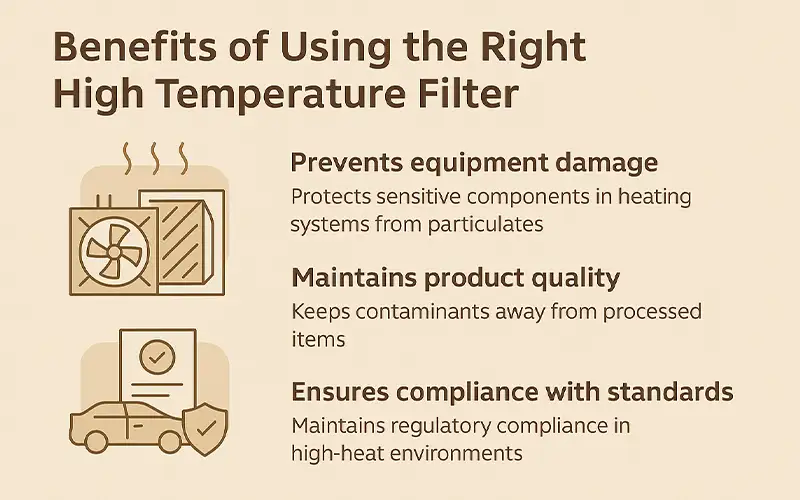
High temperature filters protect sensitive components in heating systems, ducts, and fans from dust, ash, and other particulates that can accumulate under extreme heat. By preventing buildup and abrasion, these filters extend the lifespan of machinery and reduce costly downtime.
In industries like food processing, automotive painting, and electronics curing, even tiny airborne contaminants can cause visible defects or structural flaws. Using the correct high temperature filter ensures that the air remains clean throughout the process, preserving the integrity, appearance, and performance of finished products.
Many high-heat environments must meet strict regulatory requirements for air cleanliness and worker safety. The right filter helps maintain compliance with standards such as OSHA workplace safety guidelines, HACCP food safety rules, or ISO 14644 cleanroom classifications, reducing legal and operational risks.


Leave a comment