
Expert Support
Available 24/7 via chat
Available 24/7 via chat

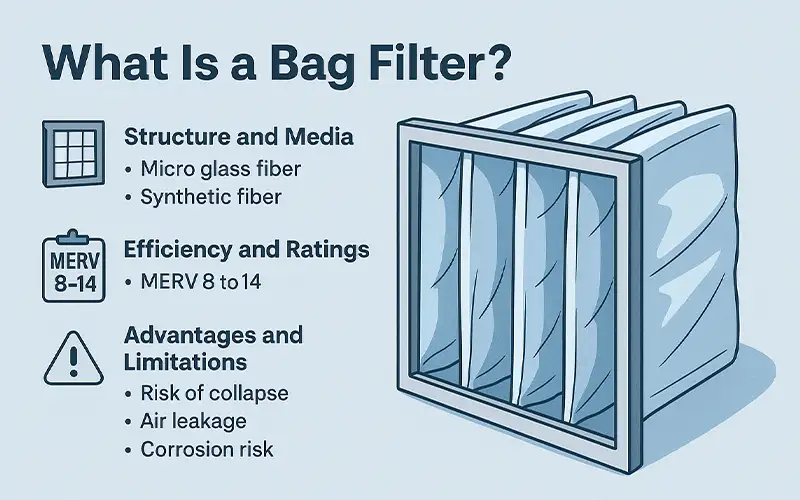
A bag filter is a type of HVAC air filter built with a rigid outer frame, usually galvanized steel or aluminum, that holds multiple flexible pockets of filter media. These pockets—often three to six in number—are made of either micro glass fibers or synthetic materials designed to capture airborne dust, pollen, and other particulates.
The flexible pockets in bag filters provide a large surface area for particle capture. Media options include:
Micro glass fiber, which offers fine particle removal and high efficiency.
Synthetic fiber, which is more durable and resistant to moisture.
Bag filters are available in a range of MERV ratings, typically from MERV 8 to MERV 14, making them suitable for medium- to high-efficiency air filtration in commercial HVAC systems. For reference, ASHRAE explains that MERV ratings are a standard measure of filter performance across particle size ranges (ASHRAE).
Bag filters are widely used due to their balance of efficiency, dust-holding capacity, and cost-effectiveness. However, they come with some limitations:
Risk of collapse: The soft pockets can collapse under high airflow, reducing effective filtration.
Air leakage: Sewn seams may allow bypass if not properly sealed.
Corrosion risk: Metal frames can corrode over time, particularly in humid or chemically exposed environments.
For more background on bag filter applications in air handling systems, see the U.S. Environmental Protection Agency’s resources on air cleaning devices (EPA).
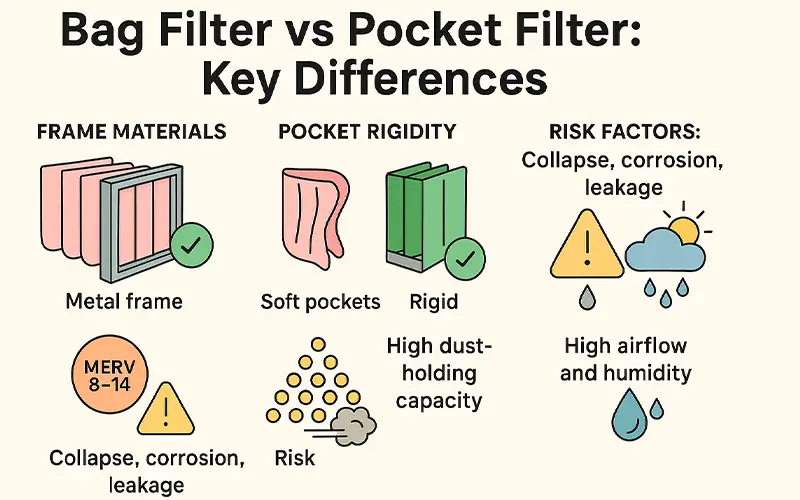
Bag filters are typically built with metal frames such as galvanized steel or aluminum. While strong, these materials are prone to corrosion over time, especially in humid or chemically active environments.
Pocket filters, by contrast, usually feature a plastic (polyurethane) header or frame, which is non-corrosive and lightweight, reducing long-term durability risks.
The most visible difference is in the pocket structure. Bag filters have soft pockets made of micro glass or synthetic media. These pockets can collapse under high airflow, which reduces effective filtration area.
Pocket filters (rigid pocket filters) are made with high-loft synthetic media that stay rigid in the airstream, ensuring consistent airflow and performance.
Bag filters are available in a wider range of efficiencies, typically MERV 8 to MERV 14. This makes them suitable for general commercial and industrial HVAC systems.
Pocket filters, while often rated MERV 8 to MERV 11, excel in dust-holding capacity due to depth-loading synthetic media. This means they can last longer in dusty or high-load environments with stable pressure drop.
Soft bag filters carry a risk of pocket collapse, frame corrosion, and leakage at seams (especially when sewn rather than ultrasonically sealed).
Rigid pocket filters mitigate these risks: their self-supporting design prevents collapse, the plastic frame avoids corrosion, and the bonded pocket-to-header connection ensures airtight sealing.
In high airflow systems, bag filters may struggle with collapse or increased pressure drop, leading to inefficiencies. They are also more vulnerable in high-humidity settings where corrosion and microbial growth can occur.
Rigid pocket filters are designed to withstand high velocities, turbulence, and extreme humidity without losing shape, making them more reliable for demanding environments such as cleanrooms, healthcare facilities, and heavy industry.
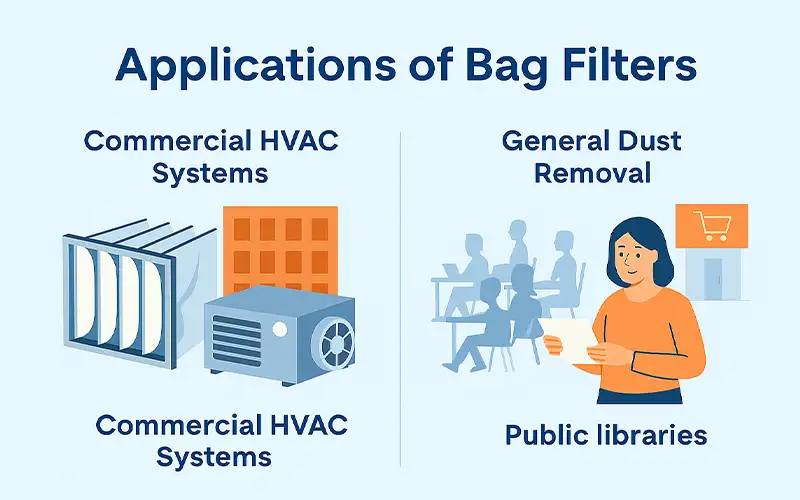
Bag filters are widely used in commercial heating, ventilation, and air conditioning (HVAC) systems. Their ability to handle medium-efficiency requirements (MERV 8–14) makes them suitable for filtering dust, pollen, and other airborne particles in spaces like shopping centers, office buildings, and airports. By reducing particulate levels, bag filters help maintain cleaner indoor environments and protect downstream HVAC equipment from dust buildup.
In environments such as schools, offices, and retail spaces, bag filters serve as a cost-effective solution for general dust control. Their multiple soft pockets provide a relatively large surface area for trapping dust and allergens, improving indoor air quality for occupants. While not designed for ultra-clean applications, bag filters are an effective first stage of air filtration in high-traffic public facilities.
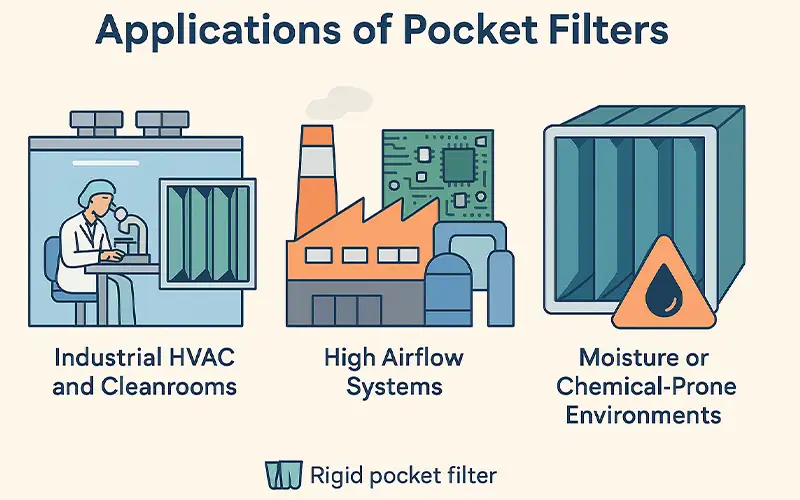
Pocket filters, also known as rigid pocket filters, are commonly used in industrial HVAC systems and cleanroom environments where higher air quality is required. Their rigid design prevents collapse under strong airflow, making them reliable in facilities that must maintain strict particulate control, such as semiconductor plants and pharmaceutical laboratories.
In high-demand applications like factories, pharmaceutical production areas, and electronics assembly, pocket filters are favored for their high dust-holding capacity and low pressure drop.
They maintain efficiency even in systems with high airflow velocities, ensuring consistent contaminant capture without compromising system performance.
Pocket filters made with synthetic, non-shedding fibers and plastic frames are highly resistant to moisture, chemicals, and microbial growth.
This makes them particularly useful in environments where humidity levels are high or chemical exposure is likely, such as chemical processing facilities or humid climates. Their durability under challenging conditions ensures both longer service life and reduced risk of corrosion or filter failure.
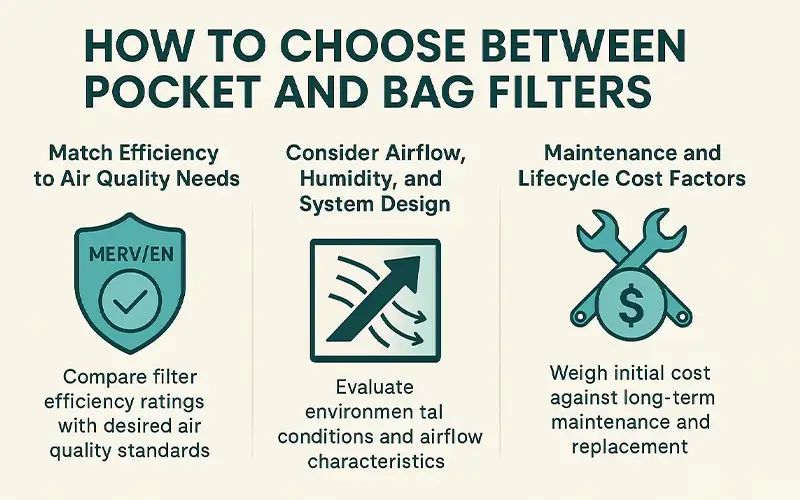
The first step in choosing between bag filters and pocket filters is aligning their efficiency with your indoor air quality requirements. Bag filters typically range from MERV 8 to MERV 14, making them suitable for commercial HVAC systems and general dust removal.
Pocket filters, often rated between MERV 8 and MERV 11, excel in high-airflow or industrial systems. For facilities that must comply with stricter standards such as ISO 16890 or EN 1822, pocket filters are often a better fit due to their higher dust-holding capacity and stability.
System conditions are critical when making your choice. Bag filters with soft pockets may collapse in strong airflow or humid environments, potentially leading to reduced performance or leakage.
In contrast, rigid pocket filters maintain shape under turbulence and high velocities, and their plastic frames resist corrosion. For systems operating in areas with high humidity, moisture exposure, or chemical contact, pocket filters provide longer-lasting performance.
Although bag filters are generally less expensive upfront, they may require more frequent maintenance due to risks of collapse, leakage, or frame corrosion.
Pocket filters, with rigid construction and higher dust-holding capacity, often last longer between replacements, reducing total lifecycle costs. When evaluating which option to choose, factor in both purchase price and the long-term cost of maintenance, downtime, and energy use.


Leave a comment