


Best practices for home air filter maintenance
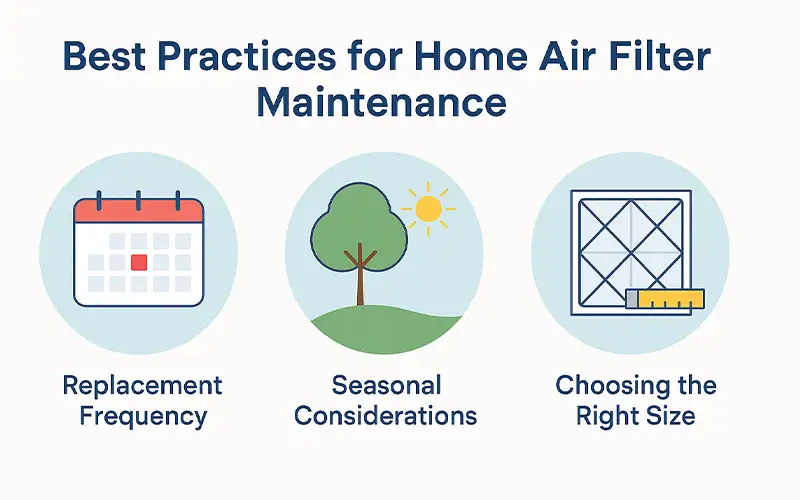
Good air filter maintenance is one of the easiest ways to keep indoor air cleaner and protect your HVAC system. It comes down to three things: replacing filters often enough, adjusting for seasonal changes, and making sure the filter actually fits your system correctly.
When all three are handled well, you get better air quality, more stable comfort, and fewer surprises on your energy bills.
Replacement frequency for common filter sizes
Most standard 1-inch thick filters (such as 16×20×1, 20×20×1, 20×25×1) should be checked every month and replaced about every 1–3 months, depending on how dusty the home is, whether there are pets, and how often the system runs.
Thicker filters, such as 2-inch or 4-inch media filters, often last longer and can typically be replaced every 3–6 months, provided the home environment is not extremely dusty or smoky.
If you notice gray or dark patches across the media, visible dust buildup, or reduced airflow from vents, it is usually a sign that the filter has reached the end of its useful life, even if the calendar says it is not “due” yet.
Seasonal considerations: spring pollen and winter heating
In many homes, filter loading is not constant throughout the year. During spring and early summer, pollen counts can be high, especially if windows are opened or the system is running in fan mode for comfort.
In these seasons, filters often load up faster and may need more frequent replacement. In winter, when homes are sealed and the heating system runs for longer cycles, filters can accumulate more indoor dust and pet dander.
It is a good habit to check filters at the start of each major season and again during the peak of pollen or heating use so you can adjust replacement intervals rather than relying on a fixed date.
If your area is affected by wildfire smoke or heavy outdoor pollution episodes, plan for additional filter checks during and shortly after those events.
Tips for choosing the correct filter size
A filter can only work properly if it fits the return grille or filter rack correctly. A filter that is too small or loose will allow air to bypass around the edges, carrying dust and allergens directly into the system.
Always start by reading the size printed on the frame of your current filter; it usually shows a nominal size such as 20×25×1. If in doubt, measure the actual opening of the filter slot and compare it with the filter’s nominal and actual dimensions shown on the packaging. Avoid forcing an oversized filter into the slot or stacking filters together.
Once you know the correct size, you can buy replacements consistently and even keep a small stock on hand so you never postpone a change just because you are out of filters.
Regularly using the right size filter, changed at the right time, is the simplest way to keep your home’s air filtration working as intended.



Leave a comment