
Expert Support
Available 24/7 via chat
Available 24/7 via chat

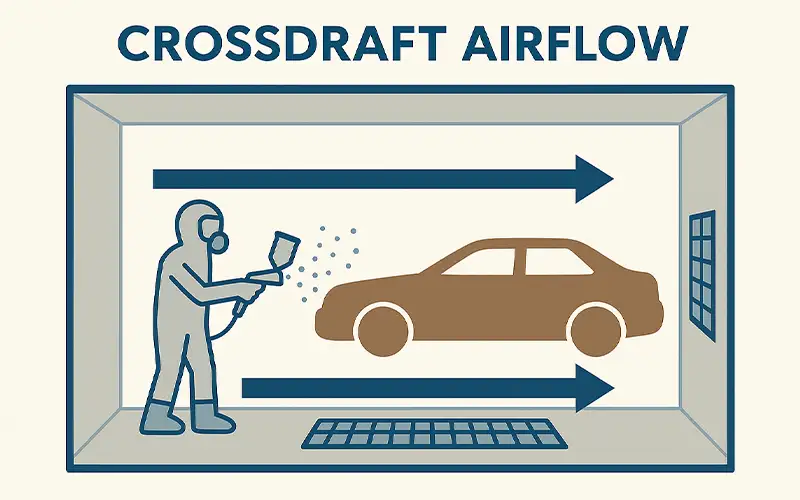
Crossdraft airflow refers to a ventilation pattern in which air enters the spray booth from the front or one side and flows horizontally across the workspace toward an exhaust system located on the opposite wall.
This design creates a front-to-back or side-to-side flow of air, carrying paint overspray away from the operator and toward filters for capture.
One of the primary advantages of crossdraft booths is their lower cost compared to downdraft systems. Because the design does not require specialized flooring or complex ductwork beneath the booth, installation is generally simpler and less expensive.
Crossdraft booths are also easier to retrofit into existing facilities, making them a practical choice for shops with limited space or budget constraints.
Despite these advantages, crossdraft airflow comes with limitations. Since air moves horizontally, overspray can pass over freshly painted surfaces, increasing the risk of uneven finish quality, blemishes, or contamination.
Workers may also experience higher exposure to airborne particles compared to downdraft systems, depending on booth design and ventilation efficiency. Additionally, overspray buildup on walls and equipment can raise maintenance requirements and potential fire hazards.
Industry guidelines from OSHA on spray finishing emphasize the importance of maintaining adequate airflow velocity in crossdraft booths to control overspray and protect workers.
When finish quality and compliance with stricter standards are priorities, some facilities may prefer downdraft alternatives.
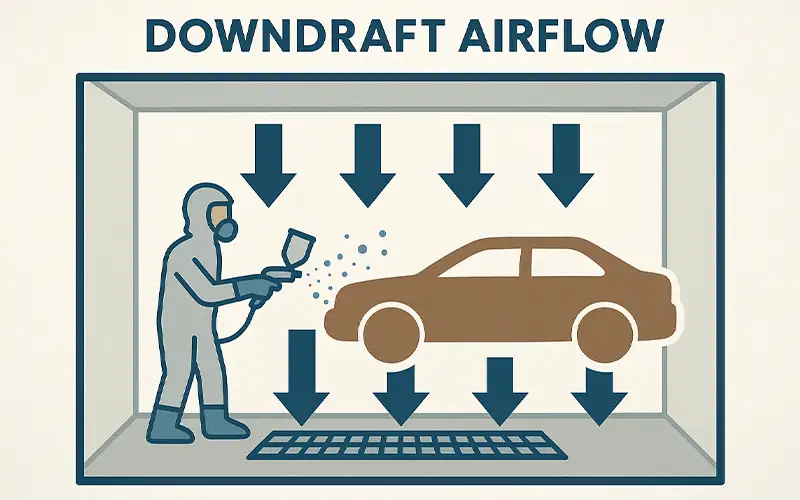
Downdraft airflow refers to a spray booth ventilation system where air enters from the ceiling and flows downward in a uniform vertical pattern toward the floor.
The airflow carries paint overspray and airborne contaminants away from the operator and the freshly coated surface, exhausting them through filters installed beneath the booth floor or along floor-level grates.
The vertical airflow design helps ensure that overspray is immediately pulled down and away from the painted surface. This reduces the chance of particles landing on fresh coatings, resulting in smoother, cleaner finishes that meet high-quality standards.
Because contaminants are directed toward the floor, worker exposure to paint mist and volatile organic compounds (VOCs) is also minimized. Downdraft systems are often considered the safest and most effective for capturing overspray in compliance with strict OSHA spray finishing regulations.
While downdraft systems provide superior finish quality and safety, they also come with higher upfront and ongoing costs. Installing downdraft booths requires specialized flooring with built-in pits or raised structures to accommodate exhaust systems, making them more complex than crossdraft designs.
Additionally, maintenance can be more involved, as floor-level filters and grates must be regularly inspected and replaced. The EPA’s guidance on spray coating operations also highlights that facilities must carefully manage filter maintenance and VOC emissions to ensure compliance.
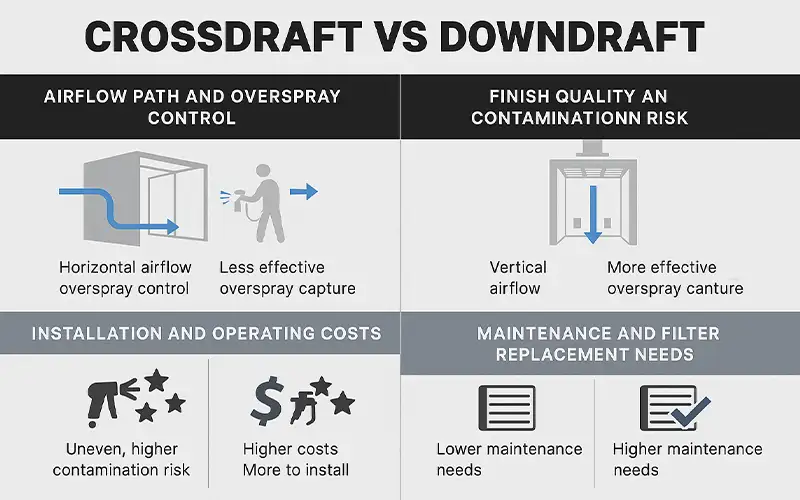
Crossdraft booths move air horizontally, either from front to back or side to side. This design makes them more affordable but increases the risk of overspray passing across the workpiece before reaching the filters.
Downdraft booths, on the other hand, direct air vertically from ceiling to floor, pulling contaminants away immediately. This creates a cleaner working zone and more effective overspray capture.
Because crossdraft airflow can carry overspray across freshly coated surfaces, finish quality is sometimes uneven, with higher potential for blemishes or dust particles settling on the paint.
Downdraft systems minimize this risk by keeping airflow consistent and pushing contaminants downward, resulting in superior finish quality that meets demanding standards such as automotive or aerospace coatings.
Crossdraft booths are typically less expensive to purchase and install. Their simpler design requires no floor pits or raised platforms.
In contrast, downdraft booths involve higher upfront investment due to specialized flooring, exhaust systems, and sometimes building modifications. Operating costs may also be higher because of the stronger fans needed to maintain vertical airflow.
Crossdraft systems often rely on filters positioned at the booth’s end wall. These are easier and less costly to replace but can load more quickly in high-production environments.
Downdraft systems use floor-level filters, which provide better capture but require more frequent inspections and careful replacement practices to maintain efficiency.
Their maintenance schedules can be more intensive, though they also support higher-quality finishes and safer operations.
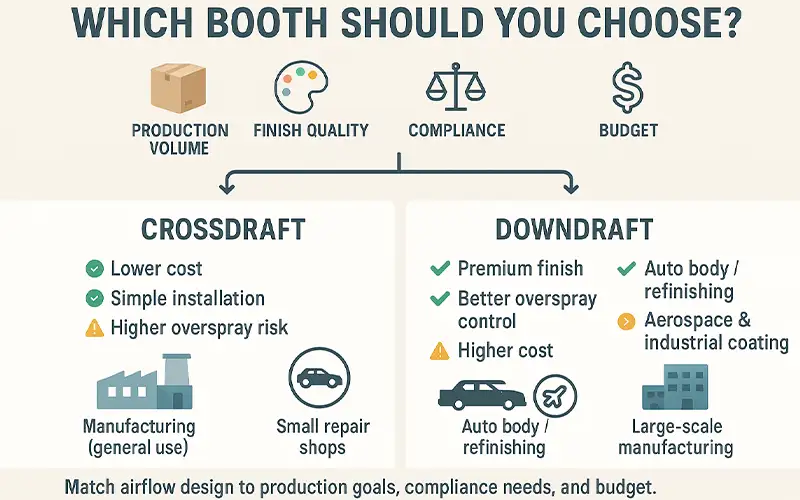
When selecting between crossdraft and downdraft spray booths, several factors determine the most suitable option:
Production volume: High-volume operations often benefit from downdraft systems due to their ability to maintain consistent air quality and finish results. Smaller shops or lower-volume applications may find crossdraft booths more cost-effective.
Finish quality requirements: Industries demanding premium finishes, such as automotive or aerospace, typically prefer downdraft airflow to reduce contamination risks.
Compliance standards: Regulatory requirements from agencies such as OSHA and the EPA emphasize proper overspray capture and ventilation. Meeting these standards may influence booth design selection.
Budget: Crossdraft booths have lower upfront and operating costs, while downdraft booths require more investment but deliver superior performance.
Auto body repair and refinishing: Downdraft booths are often chosen for achieving flawless finishes, though smaller shops may use crossdraft for cost savings.
Industrial coating operations: Facilities with high-volume production or stricter environmental compliance benefit from downdraft systems.
Manufacturing: Crossdraft booths can suit general-purpose applications, while downdraft is ideal for operations where consistent product quality is critical.
By matching booth type to application needs, businesses can achieve an optimal balance of performance, compliance, and cost-effectiveness.
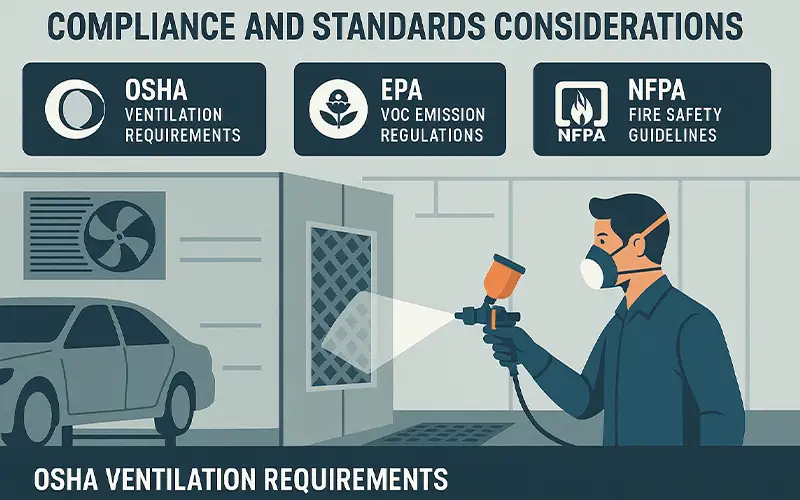
The Occupational Safety and Health Administration (OSHA) mandates that spray booths maintain proper ventilation to protect workers from harmful paint mist and vapors.
Ventilation systems must capture overspray at the source, provide sufficient airflow across the booth, and exhaust contaminated air safely outside.
OSHA guidelines also specify minimum airflow velocities and filter maintenance requirements to reduce exposure risks in spray finishing environments. More details can be found in the official OSHA Spray Finishing Standards.
The U.S. Environmental Protection Agency (EPA) regulates volatile organic compound (VOC) emissions from spray coating operations under the Clean Air Act.
Facilities must implement air filtration and exhaust systems that minimize particulate matter and VOC release into the environment. Compliance often requires using filters designed to capture fine particles and applying best practices in paint application to reduce waste. For more, see EPA’s Spray Coating Regulations.
The National Fire Protection Association (NFPA) provides fire safety standards for spray booths, focusing on controlling the fire risks associated with paint overspray.
NFPA guidelines recommend the use of non-combustible booth construction materials, proper exhaust systems, and filters that resist ignition.
Regular inspection and replacement of filters are essential to prevent paint accumulation, which can increase the chance of fire. Following NFPA fire codes ensures both regulatory compliance and safer booth operations.


Leave a comment